Energy efficiency savings: building for the future
Protecting the environment and making sure our properties are operating as energy-efficiently as possible are two topics that go hand-in-hand. Energy efficiency and being environmentally-friendly can also bring financial rewards, as the drive to make your home more economical to run can also save you money.
Our environmental future
There are many aspects of construction that can add to the energy efficiency of a home. The UK Government has recently announced that a cash incentive to homeowners is in the pipeline, with a planned introduction in September.
With Green Home Grants, households could be promised up to £10,000 to make their homes eco-friendlier. The initiative, which is yet to have its details outlined, would enable 650,000 households to save up to £300 on energy bills. To secure the funding, each customer has to get a quote from an accredited supplier to install such features as wall and loft insulation, double and triple glazing, and eco water and heating systems. It seems that the lowest-income households will be able to claim the full cost of work up to £10,000. Others should get a two-thirds reduction off the bill of up to £5,000.
Eco-friendlier homes for energy efficiency
A newbuild home offers the ideal opportunity to build these innovations into your property from the start. The more innovations that can be incorporated, the greater the efficiency. Insulation in a loft space, double glazing and other aspects of energy saving are incorporated in all newbuilds these days as a matter of course. In both rural and urban locations, they can make a massive difference to household bills.
The bigger the property, the greater the savings
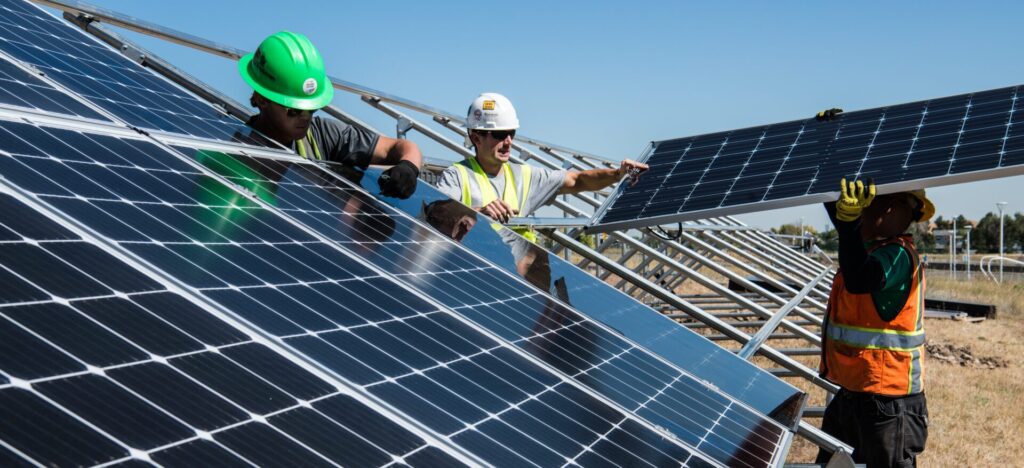
Solar power is becoming more and more popular with homeowners as a way of saving on their energy bills and producing their own power. The UV panels, which cost on average £4,800, harness the sun’s rays to become electricity. Savings can vary wildly, but in some cases, customers can earn money back by selling excess energy to their suppliers. Including solar panels on the roof or in the surrounding plot could make all the difference in the long run on energy use and national grid savings.
Graham Sime, Director of TSPEC, a renewable energy specialist, tells us, “There are many innovative ways to utilise and maximise the use of the free electricity a household generates.
“Simple solutions such as immersion control to supplement hot water production are very commonplace. Battery storage, which minimises grid consumption day and night, is ever increasing in popularity. Further advances in technology now even enable you to directly charge your hybrid or electric car from the PV panels with fast charge capability up to 32A.”
Fire and water for energy efficiency
Heat generation and water conservation are two more hot topics in the ongoing construction debate.
Traditional gas boilers are set to be banned under new legislation designed to address climate change, with Air Source heat pumps (ASHP) and Ground Source heat pumps (GSHP) being preferred instead. Graham explains further the costs and savings implications,
“The systems use Air temperature or closed loop ground heated fluid, to heat Domestic hot water and heating systems via heat exchangers to reach controlled temperatures up to 75 degrees if needed. It can cost £9,000-£15,000 to install an ASHP and between £12,000 to £ 19,000 for a GSHP but a heat pump will take £1000 or more off an annual energy bill typically, sometime more when compared to LPG or Oil based systems.
“Heat pumps also reduce your CO₂ as there are no emissions. In addition to the savings there is also the Ofgem operated RHI scheme which offers households an investment support scheme, this scheme will give you a payment every quarter for seven years based on the heat load of your home. For a typical three or four bed home using a GSHP this could be up to £2,000 a year or for the same home with an ASHP this could be as much as £1,600 a year. For some properties this could be higher, especially for GSHP projects going into older refurbished homes, for some even as high as £4,500 per annum.*
Expert advice on energy efficiency
Discussing how water usage can also be reduced by installing measures that recycle water onsite, Graham points out that, “Collected surface water from guttering and other areas onsite can then be used for such utilities as a water tank, or flushing the toilet, or irrigation, which don’t require drinking water quality liquid to be effective.”
Thinking of building your own house? Talk to us about sustainable designs and our self-build solutions.
Contact Graham at TSPEC (www.tsepc.co.uk) to find out more about renewables.
*Please note the figures are a guide only as every property is individual , figures are based on current rates set by Ofgem.
Latest posts
- 26th February 2025Planning for the future – Local Development Plans
- 5th February 2025On your doorstep – the importance of a site’s location
- 22nd January 2025Build, build, build – the importance of regeneration and housebuilding
- 9th January 2025Ettley Grove in Calveley: taking a closer look at the houses on our new development
- 19th December 2024Putting a roof on our multi-generational self-build home
- 12th December 2024Choosing Calveley for our latest development, Ettley Grove
- 28th November 2024The lie of the land – what types of land can you build on?
- 13th November 2024Our new development in Cheshire: total peace of mind when you buy from CB Homes
- 24th October 2024New build homes in Calveley, Cheshire – just launched!
- 24th October 2024Planning laws in England – what you need to know when you are selling land

CB Homes Self-Build Projects
Get inspired with our range of past and current projects across a range of different house styles, requirements and budget.


