The Self-Build Guide Next Steps: 2. Assembling your self-build team
Once you have chosen and secured a plot of land for your self-build project, the next steps are to look at how you will go about designing and constructing your new home.
With a financial pathway secured, you’ll need to look at bringing together a team of house builders and professionals to work on your project.
Points to bear in mind
It is important to find the right construction partner to carry out your project. It’s equally important to identify a designer who will reflect your vision and ambition. You may have first-hand experience of the industry yourself – you may be a builder or architect, for example – but in the majority of cases, clients undertaking self-build projects need to seek expert advice and guidance when they come to assemble a dream team for their project.
Broadly speaking, there are three ways to approach a self-build project. They all have advantages and disadvantages so you need to choose the one that best suits your needs
1. A turnkey Self-Build solution
Many companies, such as CB Homes, can provide an all-in-one bespoke turnkey self-build service, which means they will oversee a project from design to completion.
What are the advantages of a turnkey self-build solution?
- The initial Design Consultation should include a free, no-obligation design meeting so you can design your self-build from initial concept with the design team – or you may be able to select one of the company’s own signature designs
- You can get involved as little or as much as you want to
- You can tailor the project design to your exact requirements to match everything, from lifestyle to budget
- You can personalise building plans, which are prepared with a fixed fee quote meaning that what you are quoted is what it will cost
- You don’t have to pay any money up front. The first payment only becomes due when the foundations are completed – and you can really begin to see what your home will look like
- The self-build company takes full responsibility for the project, including all insurances and health and safety, meaning less risk for you
- There will be a project manager provided as part of the service, who will oversee the whole venture for you and be your single point of contact
- Your project manager will liaise between you and other members of the project team, such as the architect and site manager. This simplifies the process and any inquiries and discussions can take place on a personalised basis
- All planning permissions will be obtained on your behalf and your application will be managed for you through to decision
- Experienced industry professionals can ensure a streamlined application process and should have a longstanding reputation and strong relationships with Local Authorities and planners.
2. Select your own architect and builder
There are advantages to choosing a company that provides a complete package, but there are other options available too. You can assemble your own team by selecting an architect who comes up with a design and then choosing a builder who will quote for delivering it. The builder may have a team of bricklayers and other technicians, such as electricians and heating engineers, or may subcontract these roles.
Advantages to selecting your own architect and builder
- You may want to choose your own architect if you have one in particular in mind or you have your heart set on a very specific or unusual type of build
- An architect will make many suggestions and collaborate on the design of the property and incorporate features that you want to include
- Some architects may be willing to project manage the build themselves and provide warranties
- If you are employing your own designer and architect, they can take care of any planning submissions required.
Don’t forget…
- it is quite often the case that many would-be self-builders find that their architect’s plans turn out to be very expensive once they are priced up for building and some compromise on the design may be necessary to bring it back within budget
- It is important to know who has overall responsibility for the build so in the event of something going wrong, does this rest with the architect or builder as you could be caught in a dilemma of each party blaming the other
- If you choose this option you need to be confident that your builder really understands the architect’s drawings, so look for past projects, testimonials and reviews
- if you get several quotes from different builders, make sure they are all quoting for the same specification, so all the quotes are genuinely ‘like for like’.
3. Client as project manager
If you are extremely organised and are prepared to do a lot of research, you may decide to project manage your self-build yourself.
If you are project manager, remember…..
- It is a very time-consuming process so you need to be prepared for a huge commitment, alongside any pre-existing work or family commitments you may have.
- Although being your own project manager can be very personally rewarding, remember it’s a huge jump to go from designing a house to actually going on site.
- Once you have found an architect, a structural engineer and a builder, as project manager you will then be responsible for sorting out pre-start documentation, regulations and warranties. The ‘paperwork and politics’ of dealing with public bodies, local councils and utilities need a massive amount of time and patience.
- You might think that managing your own build will be the cheapest option. In reality, it may turn out to be more expensive and it is certainly very likely to take longer.
- You can be taken by surprise by issues such as delivery timescales for materials for example, which can be up to several months, depending on market demand.
- Lack of familiarity with efficient ways to complete the pre-start documentation and the planning permission process can also lead to quite lengthy delays, considerably increasing the length and subsequent expense of the project.
Trust, reliability and synergy
Whichever of these three routes you decide to go down, when it comes to assembling your team, in addition to professional expertise, it’s also important to bear in mind qualities such as trust and reliability too.
You should research your potential project partners online, by taking a look at their websites. If their website is doing its job, you’ll be able to find accreditations, awards, testimonials and case studies demonstrating a company’s successes, and also that it has the relevant protections and warranties. Being assured that everyone involved in your project shares your passion and enthusiasm is also an essential aspect.
Assessing all the different aspects of these prospective collaborators will help to inform your decision and find the perfect synergy to realise your dream project.
Latest posts
- 26th February 2025Planning for the future – Local Development Plans
- 5th February 2025On your doorstep – the importance of a site’s location
- 22nd January 2025Build, build, build – the importance of regeneration and housebuilding
- 9th January 2025Ettley Grove in Calveley: taking a closer look at the houses on our new development
- 19th December 2024Putting a roof on our multi-generational self-build home
- 12th December 2024Choosing Calveley for our latest development, Ettley Grove
- 28th November 2024The lie of the land – what types of land can you build on?
- 13th November 2024Our new development in Cheshire: total peace of mind when you buy from CB Homes
- 24th October 2024New build homes in Calveley, Cheshire – just launched!
- 24th October 2024Planning laws in England – what you need to know when you are selling land
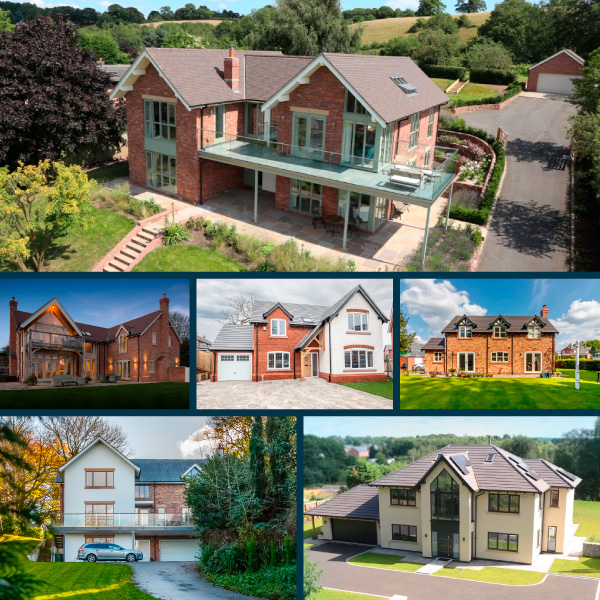
CB Homes Self-Build Projects
Get inspired with our range of past and current projects across a range of different house styles, requirements and budget.


