Your Self-Build Planning Application decision
The Self-Build Guide Planning – Part 3
The best way of avoiding planning application refusal is to take advice from a planning expert, long before your application has been submitted. If they conduct a site appraisal, they are best placed to advise you whether or not your project is likely to get a green light. This is based on their years of experience and knowledge of planning policy.
If the Planning Officer has indicated that he or she is likely to refuse the application (but has not yet done so) then there is an opportunity to revise the application, without having to go through the whole process again.
If the application is actually refused by the Planning Officer then you cannot amend the application. You need to submit a new application, which may or may not attract a fee. There is provision for a “free go” within 12 months of a refusal so long as it is on the same site and of a similar development to that refused by the Local Planning Authority. This free go on a site can only be used once.
Can I change the design of my self-build project?
If your application is refused, the reasons for refusal have to be spelt out. It is usually a specific policy that has been breached. The decision notice itself is short but the planning officer’s report will provide you with more background. You can find this on the council’s website. If you re-submit the application to appeal against the refusal, you can provide additional information as grounds for your appeal. However, you cannot change the design during an appeal as it the scheme that was determined by the Local Planning Authority that must be considered. Of course, you can go back with a fresh application for an alternative design.
What appeal processes are available against a planning application decision?
If your self-build planning application is turned down, you have the option of making an appeal. The time limit on doing this is six months from the date of the refusal. You can go through one of the three appeals processes. These are either a written submission, an informal hearing, which does not happen very often, or a public enquiry, which can get very expensive.
What is a written submission?
A written submission responds specifically to the reasons for refusal. Once submitted, there is a six week time period during which third parties can respond. During this six week period the Council is also able to produce its Statement as well as third parties. You will then be given a final opportunity to make comments on any additional submissions from third parties or the Council. A planning inspector will visit the site and provide an appeal decision in writing. If you decide to go down this route, you don’t have to pay any fees but you may have to pay for expert help.
When is it worth making an appeal against a planning application decision?
You should only go down the appeal route if it is the only option left to you. You have to be sure that you can provide genuine arguments on key planning points as your grounds of appeal.
If the planning officer has recommended approval but it is the planning committee that has turned it down, it might be worth considering an appeal. If the planning officer has not recommended your plans being approved, then you need to look really carefully at their reasons. If they involve a particular interpretation of planning policy or a point of law, then your best bet is definitely to take expert planning advice rather than managing the appeal yourself.
Just over one in three appeals are successful. Going through the whole appeals process is time-consuming. It can take several months and may end up costing you more money. Occasionally you can get costs back from the council but similarly, the council can make a claim against you for costs as well. Even if you win the appeal you won’t automatically get costs awarded back to you.
What is ‘discharge of planning conditions’?
If planning permission is granted, discharge of planning conditions will need to be met. There will be some conditions which are “pre-commencement conditions”. These are the conditions which need to be discharged before development can start.
Not all conditions are pre-commencement conditions. Some will relate to implementing the planning permission in accordance with the approved plans or in accordance with other reports which have already been submitted to the Local Planning Authority.
Planning conditions vary from matters such as highways work to improve access or getting a ground investigation report completed to specifying what materials have to be used in the construction.
Meeting planning conditions
You must make sure that all conditions are met or planning consent cannot be implemented. For example, the building position and specific floor levels are very typical planning conditions. In a worst case scenario, if the building is not built exactly in the specified position with the precise floor levels as set out in the conditions, the permission is invalid and the building might have to be rebuilt.
It is common for a local authority to make approval of external materials a condition of planning. These include external cladding, brickwork, render, tiling, external joinery colours etc. They may or may not require to see actual samples. If you are building in a Conservation area or Area of Outstanding Natural Beauty, restrictions are likely to be tighter. Again, if you don’t get approval of these things in advance, you may have to replace them, so it’s never worth taking a risk in the hope you will just be lucky.
Contact us to find out more about our free planning advice and full self-build turnkey package. This includes the management of the whole planning application process, including an appeal, if it proves necessary.
Latest posts
- 26th February 2025Planning for the future – Local Development Plans
- 5th February 2025On your doorstep – the importance of a site’s location
- 22nd January 2025Build, build, build – the importance of regeneration and housebuilding
- 9th January 2025Ettley Grove in Calveley: taking a closer look at the houses on our new development
- 19th December 2024Putting a roof on our multi-generational self-build home
- 12th December 2024Choosing Calveley for our latest development, Ettley Grove
- 28th November 2024The lie of the land – what types of land can you build on?
- 13th November 2024Our new development in Cheshire: total peace of mind when you buy from CB Homes
- 24th October 2024New build homes in Calveley, Cheshire – just launched!
- 24th October 2024Planning laws in England – what you need to know when you are selling land
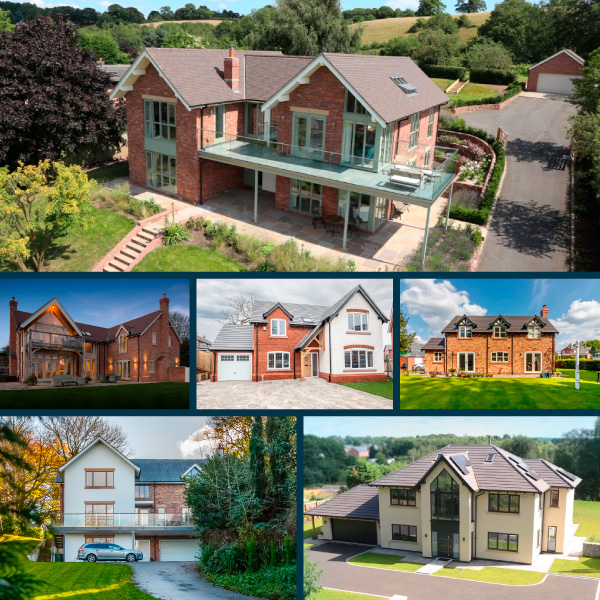
CB Homes Self-Build Projects
Get inspired with our range of past and current projects across a range of different house styles, requirements and budget.


