Self-Build Sustainable homes
Designing your new self-build home is an incredibly exciting process. Considering how the new kitchen is going to look, the layout of the bedrooms, and where to install the wall-mounted wide-screen TV are challenging enough. Have you thought about the sustainability of your home?
Most modern homes are built with sustainability in mind, but we can provide further solutions, which can take your new home to the next eco-friendly level.

Retrofitting sustainable systems to your new home is possible. However, we do advise that homeowners will get the most out of their sustainable heating and power options by incorporating them into their new eco house design at the initial planning stages.
Building for the future
Designed for modern family life, our sustainable housing developments blend traditional design with cutting edge technology, providing the perfect combination of practicality, luxury and sustainability. There is no project too big or too small, or a sustainability option that we won’t consider to help make your new home as eco-friendly as possible. We can make your dream of a new home, that is energy efficient, environmentally aware and aesthetically pleasing, a reality.
Our homes also have a 10 year NHBC Buildmark warranty, plus CB Homes’ own two year customer care warranty, to provide even more peace of mind for you as the homeowner.
Take a look at some of our options below, or speak to our team to discuss sustainable possibilities which you’d like to consider for your new self-build eco home.
Solar power
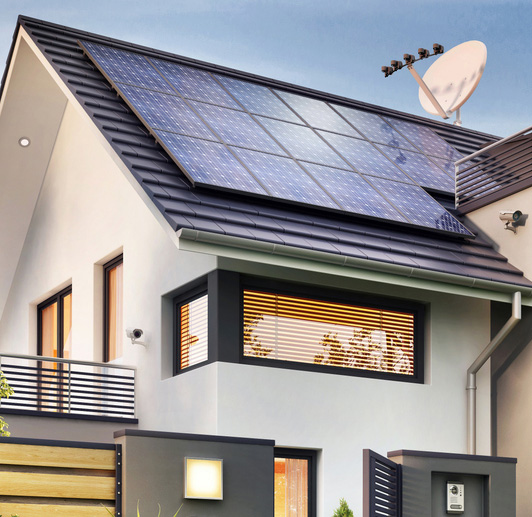
UV solar panels are one of the most common and recognisable forms of sustainably providing power for the home.
Solar panels are most commonly positioned on the roof of the building, ideally in a south-facing position to capture the sun’s rays all through the day. We provide in-roof systems or tiles to provide a more streamline solar panel design.
Or if your self-build eco house includes a large plot of land, solar panels can be allocated their own space on the ground but connected to the house through underground wiring, without interrupting the sleek house façade design.
How it works
Harnessing the sun’s rays, solar panels convert the sun’s heat into electricity, helping homeowners to save on energy bills by using this renewable energy source. By incorporating solar panels into a sustainable self build, some customers may be able to sell any excess energy generated to their suppliers, earning money back, or store the energy in batteries to be used later.
Solar panels can also help to power your house in other ways; from using the solar energy to power immersion heaters to supplement hot water, to charging hybrid or electric cars directly from the panels, helping to make a difference to energy consumption and the environment.
Speak to our team about your sustainable solar power options.
Heat recovery pumps
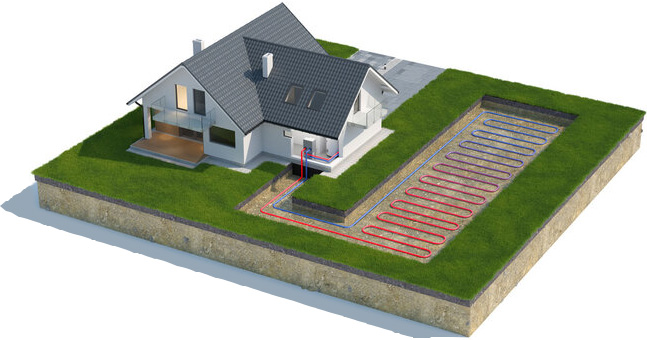
With gas boiler installation set to be banned eventually in new homes, Air Source heat pumps (ASHP) and Ground Source heat pumps (GSHP) are fast becoming the favoured method of heating new build sustainable homes.
How it works
Heat pumps provide heating and hot water through heat exchangers, using either air temperature or closed-loop ground heated fluid, reaching temperatures of up to 75 degrees in a much more energy efficient way. These heat pumps also reduce a home’s carbon footprint, as they don’t expel CO₂.
Although a heat pump will require a large initial investment (between £9,000 to £19,000, depending on the type), a heat pump can lead up to savings of at least £1,000 a year. There are also RHI schemes available, such as from Ofgem, which can provide investment support with a payment every quarter for seven years, based on the heat load of your home. Prices will vary, but some properties could receive up to £4,500 per year.
We can camouflage a heat pump box, or site it on the outside of the home where it won’t be seen, preserving the property’s appearance.
Speak to our team about your sustainable heat recovery options.
Underfloor heating
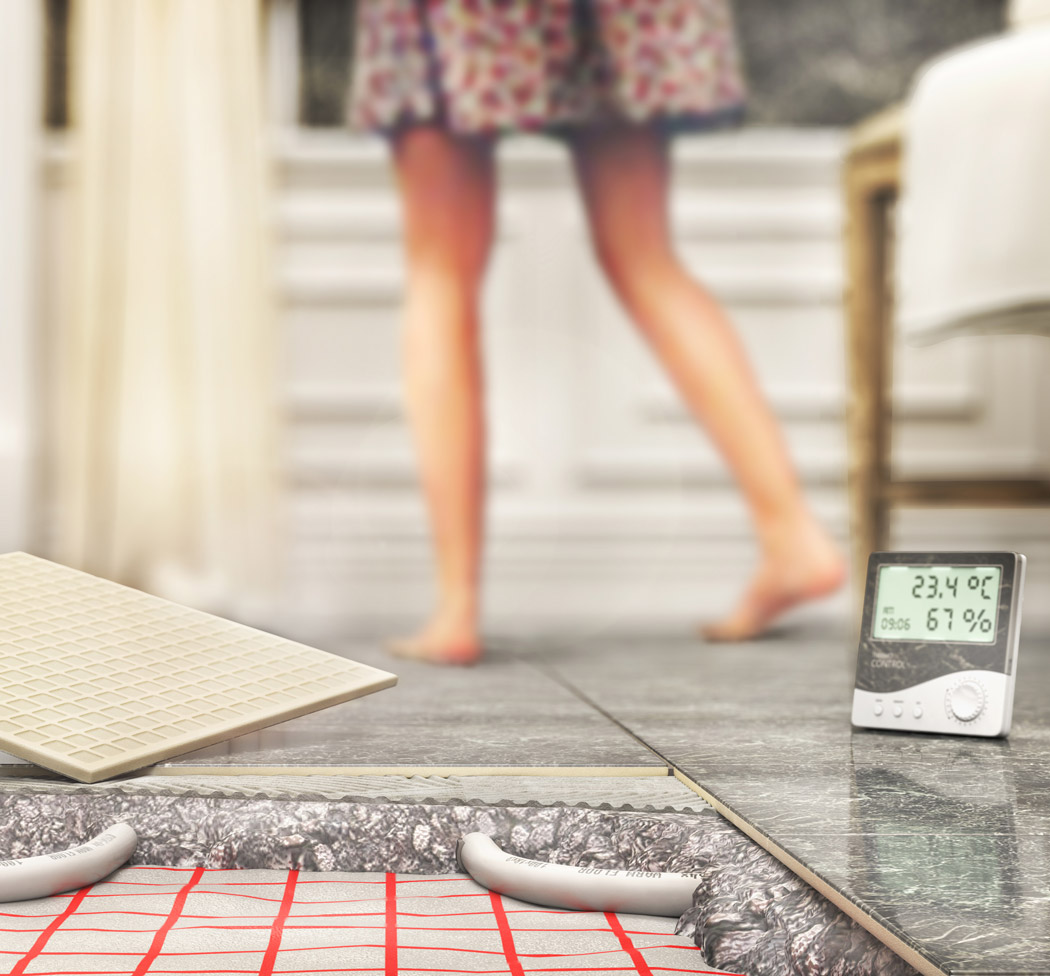
In cold weather, underfloor heating is a popular choice for many self-builders, not least for the aesthetic appeal of having wall space uncluttered by radiators.
How it works
Unlike traditional radiators, underfloor heating does not need to operate at such high temperatures to heat a room, increasing fuel and energy efficiency.
The rising warm air ensures a consistent comfortable room temperature at the living level, regardless of the height of the room, and therefore avoids the unnecessary use of energy to heat an entire room to ceiling height.
Underfloor heating options mean that homeowners can benefit from reduced energy bills, saving up to 40% on gas heating for their home.
Heat recovery pumps and solar panels are all sustainable options for powering underfloor heating, ensuring your systems all work together to benefit your eco home and the environment.
Speak to our team about your sustainable underfloor heating options.
Insulation
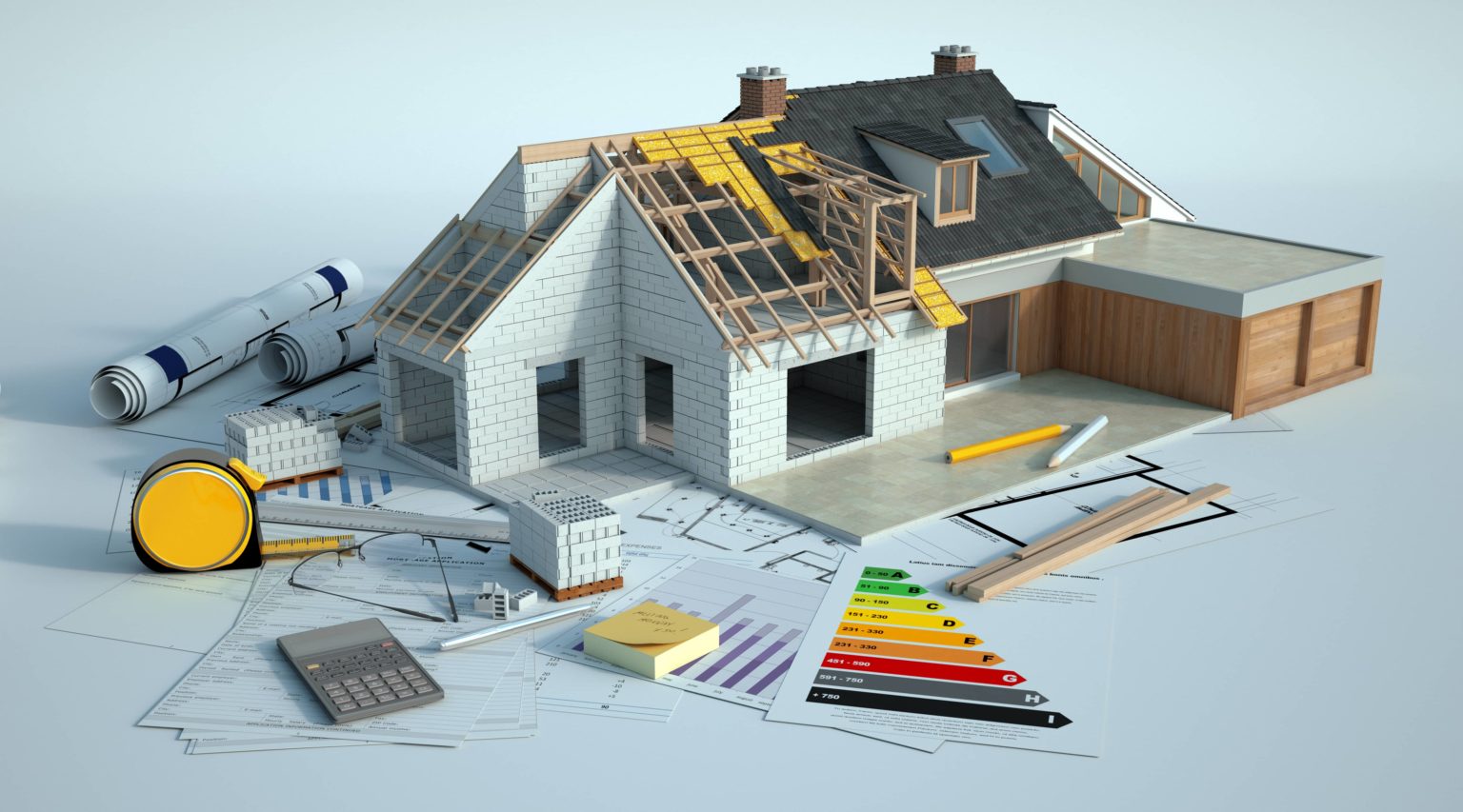
Compared to older properties without insulation, our new builds can make a substantial difference to heating bills, as well as helping to save energy for the good of the planet.
How it works
Air-tight insulation comes as standard with our new and self-build developments. This includes insulating the loft and wall spaces, adding double or triple glazing, as well as ensuring no gaps or cold bridging between windows and external walls. This will all help to keep heat in, reducing the amount of heat and energy a house consumes.
Our wall, roof and underfloor insulation meets our Part L1 requirements of Building Regulations April 2013 Edition, providing 100mm fully filled cavity walls, 450mm roof insulation and a minimum of 100mm underfloor insulation, which can still be used when installing underfloor heating.
Speak to our team about your sustainable house insulation options.
Ventilation
One of the downsides of airtightness from insulation can be that there isn’t sufficient airflow, making the air stale. However, a ventilation system can help redistribute airflow through a house, without making it feel any colder.
How it works
A ventilation system of heat recovery vents consistently warms incoming cold air using the heat of the expelled stale air. Usually positioned in the loft, the new air is then distributed to all corners of your environmentally friendly house, helping your interiors to feel light and fresh. This can help to recover up 95% of the heat which would otherwise have been lost.
Ventilation systems are ideal for helping to keep a house cool during the summer months, maximising air flow, especially when the weather turns humid. It can also help to reduce condensation from rooms such as kitchens and bathrooms, as well as pollutants and other allergy-causing particles.
The ventilation system can easily be disguised inside the home, and is accessibly controlled with the flick of a switch.
Speak to our team about your sustainable ventilation options.

Heating
Even though your dream eco house build might be a rural escape in the country, some small communities are still without a direct gas supply, meaning alternative and more sustainable heating options can be considered.
How it works
Biomass boilers run on wood pellets or logs, making them more environmentally friendly than gas, which contributes to about one third of the country’s carbon emissions.
Hydrogen boilers are even more efficient, and produce no carbon emissions, only heat and water. If your property can access the gas network, hydrogen boilers can be installed and work with gas, but can be switched to hydrogen in the future without the infrastructure needing to be replaced.
For those who still swear by gas for their heating, an LPG tank could be the answer, or for a more sustainable option, BioLPG tanks convert heat from LPG waste, making it a more renewable alternative.
Speak to our team about your sustainable heating options.
Water
Water is an essential element of the home. When considering your sustainable house design, finding ways of conserving and preserving water can help to reduce water consumption, providing savings on water bills and resources.
How it works
Harvesting rainwater through storage tanks can provide a more sustainable solution for circulating water into a heating system, or for watering a garden, rather than using purified mains water. This will not only reduce the strain on the environment and water sanitisation resources, especially when in a more remote rural location, but can also save on water bills too.
Recycled other water, such as grey water from sinks, showers and baths, can be stored in water tanks for use in the garden, or used where drinking water is not needed to be effective - for flushing toilets, for example.
While it may have the aesthetic you’re looking for for your traditional design self-build home, old-style toilets and sinks are the less economical option. Modern toilets, which can still be available in an older looking style, use less water per flush (less than four litres), providing the benefits of saving water and money over the long-term. Slower-flow shower heads also reduce the amount of water lost down the drain, using less than 10 litres per minute.
Speak to our team about your sustainable water options.
Sustainable design
Making sustainable aesthetic decisions on the overall design and finish when building an eco house can also influence how eco-friendly your new home will be.
How it works
Floor-to-ceiling wrap-around windows, which not only provide a beautiful vista of the surrounding countryside, will also let in as much natural light as possible, saving on electric lighting.

Reclaiming or reusing old building features and materials can also help make the environmentally friendly construction of your home more sustainable, whilst providing unique and interesting flourishes.
Choosing natural or eco paints and varnishes to decorate, free from harsh chemicals, as well as natural furnishings, such as cotton and linen, are all ways to embrace more sustainable living.
Considering the orientation of your home to the sun’s path when deciding on the layout of your home can make all the difference. Rooms such as bathrooms, bedrooms and kitchens, which would benefit from being cooler, should be positioned on a more north-facing gradient, whereas family living rooms should be positioned in a more southerly direction, making the most of the sun’s natural warmth to provide a more renewable heat source.
As eco friendly house builders, our solar panels can also assist with harnessing the sun’s heating power.
Speak to our team about your sustainable home design options.
Future proofing
While most sustainable options will assist your eco friendly house now, there are several options which will future proof your home for the long term.
How it works
A SMART energy reader or thermostat can be fitted, which not only will monitor the energy usage of your house but can be turned down or off, enabling you to control your heating and utilities use at any time.
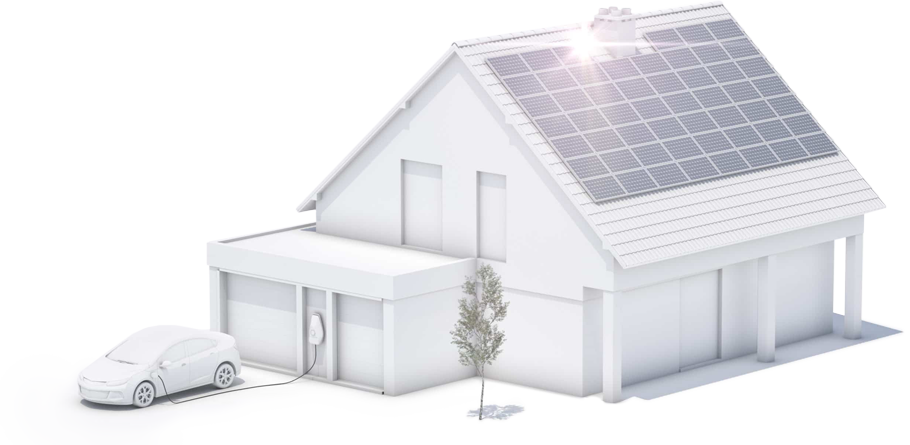
With a ban on new cars being produced with petrol or diesel engines by 2030 in the UK, more people are turning to electric cars. By adding electric car charging points to your new home or garage as standard, this will assist with preparing for this greener switch.
Installing a hydrogen boiler will be more cost-effective in the long term for when all homes will need to switch from gas to other heating alternatives.
Considering the layout of your home and how it might change in the future can also prevent the need for costly extensions or adaptations. For example, a ground floor office space could also be converted to a child’s playroom, or for an accessible bedroom as you or your relatives get older, allowing you to remain in your home for as long as possible as needs change.
All our homes are built with wheelchair accessibility in mind, with wide corridors and doorways, enabling easy access and inclusivity for all eventualities of life.
Speak to our team about your sustainable future proofing options.
Award winning homes

6 times winners

13 times winners

8 times winners

2 Awards for best luxury home

Pride in the job award