Sustainability in Self-Building: Part 1. Building Regulations

Building Regulations for sustainable homes
The Building Regulations for England and Wales are constantly evolving. Times change and so do all kinds of aspects of the construction process – from the materials we use, to the government legislation we work to. Perhaps the biggest issue affecting building in the 21st century is sustainability and our changing climate. This issue is making all of us think more deeply about how houses function and how we build them. In a new series of blogs, we’re going to look at sustainability in self-builds.
More carbon neutral homes
In this first part, we explore the overall changes that have been made to building regulations, to promote more carbon neutral homes. The changes that have been introduced are the most significant updates made in a decade. The new legislation has considerably affected several categories, including Parts L (Conservation of Fuel and Power), O (Overheating), S (Electric Vehicle Charging), G (Water use) and F (Ventilation). All new homes registered after 15 June 2022 have to produce 31% less CO2 emissions than current standards. The Building Regulations also include new standards to reduce energy use and carbon emissions during home improvements and extensions, as well as for new-builds.
Building towards Net Zero
Parts L and O have been amended with regard to overheating and heat loss. The way houses are made ensures they are warm in winter – to save on heating costs and prevent heat loss – but even warmer in summer. They are essentially sealed units, except for the minimal amount of ventilation, without opening wide our windows and doors. The changes to Part L are the first steps towards ‘Future Homes Standards 2025‘, which moves us towards Net Zero. We have almost reached the limit of what we can do on the actual fabric of buildings – the bricks/blocks and mortar – so now we have to turn to technology for help.
We need to look at how much insulation is included in this fabric – the wall cavities, roof cavities and beneath floors. Once these have been optimised, we turn to look at the heating source. All new-build homes will have phased-out gas boilers by 2025 and must be fuelled by an alternative fuel source. Hydrogen has been mooted as a solution, but in developmental terms, it’s nowhere near ready for widespread deployment. This option would have less impact on the current infrastructure, because modern gas boilers can be adapted to use hydrogen. But these developments are not happening fast enough. Oil and LPG are not sustainable resources, so the remaining options are electric and solar power. We’ll be looking in more detail at these available options and other aspects of the amendments to Building Regs in future blogs.
Conservation of power and resources
The changes to Part O address the challenge of retaining a cool interior with enough ventilation to be comfortable, whilst maintaining the building’s thermal criteria. New SAP software has been released by the government, which details all the different calculations you have to carry out for each property. These current SAP calculations are based on 2019 fuel costs, so it’s hard to make them make true economic sense to customers in the present economic climate, with steeply rising energy bills, among other things, to contend with. Changes to Part F of the Building Regulations also came into effect in June 2022, with regard to ventilation and air flow. In recent years the move towards improvements to the thermal performance and air tightness has positively improved the thermal comfort and energy consumption of buildings.
Water use and recycling in new houses
There have been further changes made to Part G of the Building Regulations regarding Water. Water conservation is another key issue that needs to be addressed. This is not just because we sometimes have drought restrictions in place, but because many of us need to look at our wasteful water usage and opportunities for conservation and recycled use. Household flowrate is crucial, to keep below the maximum figure of litres per person per day. Flowrate applies to everything from taps, showers and toilets, to dishwashers and washing machines. The style trend for massive shower heads, for example, may look great, but with some models, this means people’s showers use an excessive amount of water. There are many ways we can conserve and improve our lifestyles regarding sustainability and the homes we live in, and the new regs are driving that thinking into practice.
Colin Francomb, director of building consultants Ratio Seven, provides some context around this,
“Self-builders are often at the forefront when it comes to significant changes in the building industry, with national housebuilders having much longer to incorporate changes into their building programmes. We’re having to adapt and incorporate these new rules into our designs immediately, without the benefit of hindsight of how effective they will be in the long-term, or the impacts of the financial additions involved for the builders themselves.”
Interested in building your own home? Talk to us about our complete self-build package.
Latest posts
- 26th February 2025Planning for the future – Local Development Plans
- 5th February 2025On your doorstep – the importance of a site’s location
- 22nd January 2025Build, build, build – the importance of regeneration and housebuilding
- 9th January 2025Ettley Grove in Calveley: taking a closer look at the houses on our new development
- 19th December 2024Putting a roof on our multi-generational self-build home
- 12th December 2024Choosing Calveley for our latest development, Ettley Grove
- 28th November 2024The lie of the land – what types of land can you build on?
- 13th November 2024Our new development in Cheshire: total peace of mind when you buy from CB Homes
- 24th October 2024New build homes in Calveley, Cheshire – just launched!
- 24th October 2024Planning laws in England – what you need to know when you are selling land
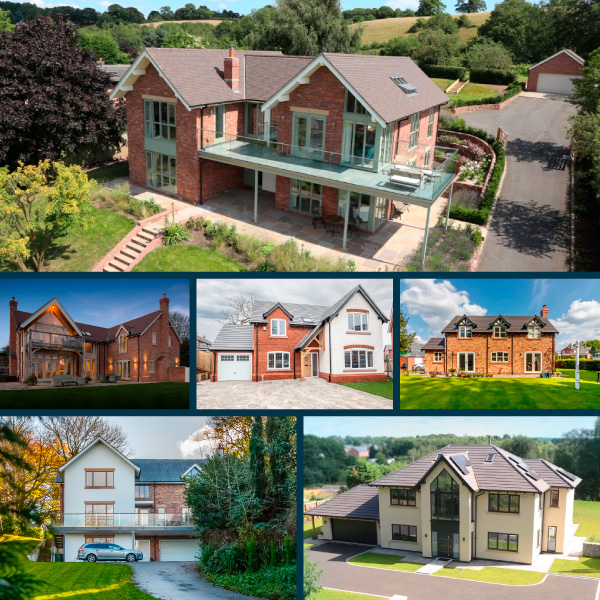
CB Homes Self-Build Projects
Get inspired with our range of past and current projects across a range of different house styles, requirements and budget.


