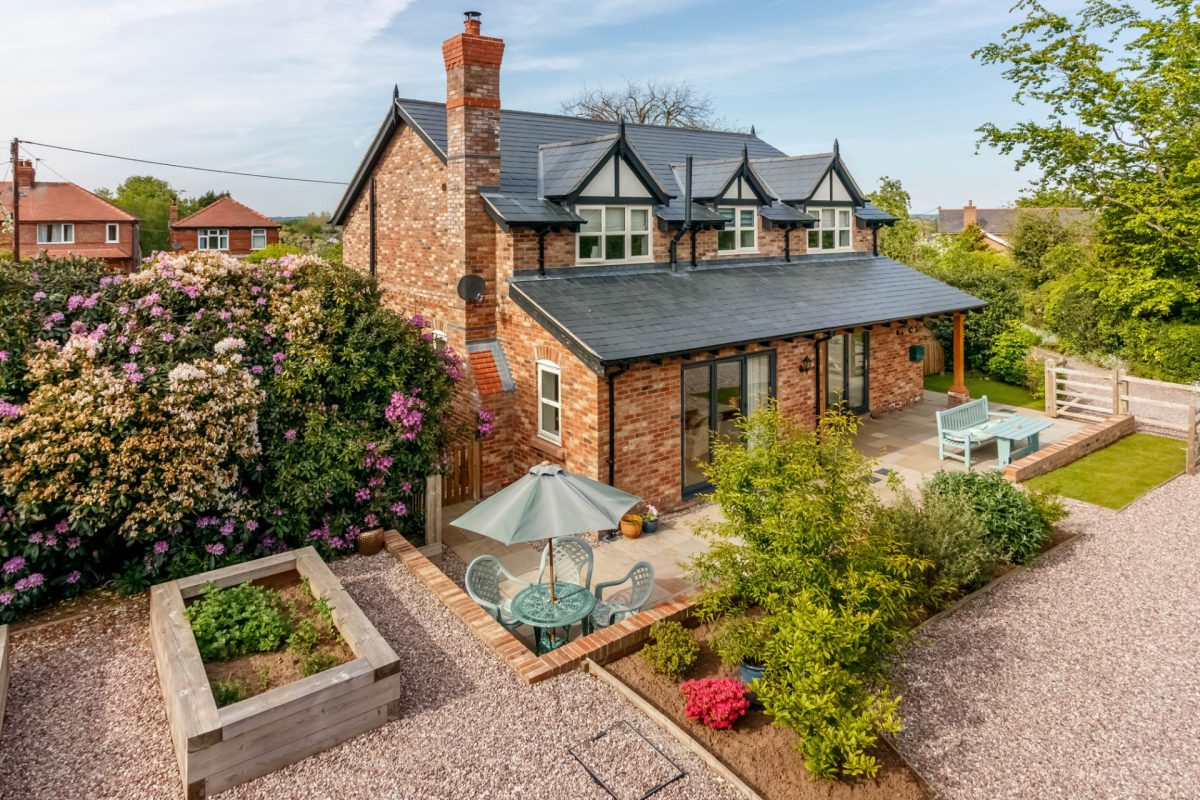
Relaxing in style: How to design the perfect outdoor space

There’s no doubt that the aesthetic appeal of a property can be enhanced enormously by the care taken with laying out its setting. Some designers think that overly fussy landscaping can detract from the impact made by a property. However, when it comes to new-builds, particularly in rural locations, there’s scope to do something really imaginative and distinctive with the outdoor space.

There’s no doubt that the aesthetic appeal of a property can be enhanced enormously by the care taken with laying out its setting. Some designers think that overly fussy landscaping can detract from the impact made by a property. However, when it comes to new-builds, particularly in rural locations, there’s scope to do something really imaginative and distinctive with the outdoor space.

This can be done in a number of ways. The use of available space and the effectiveness of perspective are really important. The position of the driveway, the view on approach, the siting of the gardens and the garage, and their relationship with the house can all have huge impact.

The best designers give a great deal of thought to the outside spaces of their projects.  Through the use of eyeline and perspective, one view will reveal one aspect of the garden, another angle another. Through design, you can draw the observer’s eye to certain features, as visual surprises and vivid settings. 

Practical and beautiful

Whatever the size of garden, long and narrow, wide and open, there are many different features that can enhance your outdoor space. Lawns are always a pleasant outside space and offer an area for relaxation and games. They can be a lot of work to maintain.

Trees too can enhance a garden, but they too must be maintained and not allowed to overtake their plot, the garden and eventually the view and light from your house.  Well-placed trees can reduce glare or offer shade and the more unusual varieties available can really set off a garden. If you’re not keen on sweeping up leaves every autumn, don’t choose deciduous varieties that shed.  Lawns and trees will also attract insects and wildlife to your surroundings.

Wide open space

Patios and paved areas can also be used to divide up the garden and partitions, such as dwarf walls and trellis, can be used imaginatively to compartmentalise garden space. This will allow you a more private place away from the open area. It can create shelter from the wind and also provide a suntrap. A pergola can have the same function, and can be timbered or open to the elements, with trailing plants.

Screening your garden into ‘rooms’ can make all the difference to how much you use the garden, as a space you enjoy spending time in.

Relaxing in style

You can also use decking, patios and steps to create different levels. If you have an uneven or sloping garden, moving from one decking level to another – up and down the garden – can add a sense of excitement, with separate dining spaces and furniture.

Boundaries can be marked with walls, fences and hedges, which themselves can be made into features. An imaginative addition to include are living walls and edible walls, which are essentially vertical allotments. The materials you use for all aspects of your outdoor space will make all the difference to its success.

You can include a pond as the focal point of the garden – relaxing by water is lovely – and water features, troughs and fountains add life to their surroundings.

There are so many unusual products and material on the market now that there’s no excuse for letting your garden be boring.  

The Self-Build Guide Next Steps: 4. Pre-start checklist

Now you have secured finance for your self-build, selected your project team and worked out timescales for your self-build project, it’s time to run through your pre-start checklist. There is a lot of paperwork involved and if you are managing the project yourself, you need to be sure you have completed every step.

Now you have secured finance for your self-build, selected your project team and worked out timescales for your self-build project, it’s time to run through your pre-start checklist.

There is a lot of paperwork involved and if you are managing the project yourself, you need to be sure you have completed every step.

Preparation for Planning and Building Regulations

Do you have all the right drawings and do the drawings for Building Regulations match the ones for Planning? It’s very important that everything, such as boundary distances and heights, are the same. This avoids falling foul of regulations further down the line, when rectifying mistakes can be expensive and time-consuming.

Once you have planning permission in place, as a self-builder you need to make sure you fill in the paperwork for Community Infrastructure Levy (CIL) exemption.

Make sure your Building Regulations plans and SAP assessment have been submitted and approved.

If your planning permission involves any planning conditions, they need to be cleared if needs be before construction commences. These could be things like supplying details of manufacturers for particular materials.

Are there any specific Planning-lead Building Regulation issues you need to be aware of?

Building Control

Building Control helps keep building standards quality high by ensuring that building work complies with the building regulations, a set of standards intended to protect people’s safety, health and welfare in and around built environments. Have you decided who you are using for Building Control? You will need to make an application before you start work.

If you are going down the replacement building route, check whether you need to submit a demolition notice to Building Control.

Health & Safety

You need to let the Health & Safety Executive know that you are starting on your construction project. Any project that is going to take more than 30 days is notifiable.

Warranty and insurance

Remember to make sure you have a structural warranty for your new home and, as soon as you have exchanged contracts on your building plot, you need to make sure you have insurance. You can get a comprehensive policy that’s tailor made for self builders. It will cover you for public liability, building works, employer’s liability and personal accident.

Services to site

Don’t forget that you will need to bring services to your site via the relevant suppliers. This may require a wayleave if you need to get access to private land or digging on public road. Either way, you will need electricity or gas eventually, and a water supply as soon as construction starts.

A place to live

Unless you are one of the minority who can stay in your current home while your self-build project is under construction, you will need to arrange for a place to stay for the duration of the build. Be realistic about how long this might take, particularly if you are renting accommodation.Contractors and materials

If you are managing the project yourself, you need to issue invitations to tender and select your main contractor and trades.

Remember to make sure that your products and materials are ordered correctly so the lead in times work for your schedule.

Budget for self-build

Right from the start, keep track of what you are spending to stick to your budget. If you are managing the whole process yourself, remember you will need to allow for costs of an architect’s drawings, legal fees, insurance and full build costs. It’s wise to have a contingency budget of around 20% in case you come across any unforeseen issues.

Turnkey package

There’s a lot to think about, long before construction starts. Our fixed fee, turnkey self-build package includes our completion on your behalf of all these preliminary planning requirements, regulations warranties and complete build costs.

Our architects provide planning drawings which we can submit alongside all the other supporting documents for planning. Once planning permission has been secured, we can work with you to make sure all the conditions are satisfied. We prepare all the pre-start documentation too. This includes drawings for building regulations, structural calculations and energy assessments. We can also register your new home with the NHBC and the appropriate local authority too.

Talk to us to find out how we can help you turn your self-build dreams into reality.

The best UK podcasts to inspire your self-build project

Dreaming of a self-build and looking for some inspirational ideas? With a wealth of information available, podcasts provide an easily digestible way to consume numerous different topics.

Described by some as more interesting to listen to than music, engaging with audio content leaves the listener free to multi-task.

What are the best self-build podcasts?

Dreaming of a self-build and looking for some inspirational ideas? We’ve got some of the best UK podcasts to inspire you. With a wealth of information available, self-build podcasts provide an easily digestible way to consume numerous different topics.

Described by some as more interesting to listen to than music, engaging with audio content leaves the listener free to multi-task.

Less of a time commitment

Podcasts can look like less of a time commitment than a large book or lengthy video too. Over seven million people in the UK have discovered the joy of podcasts, with thousands to listen to, available through smartphone apps such as Spotify, iTunes and Google Play or through web browsers like Chrome or Microsoft Edge.

Multi-tasking while you listen

Whether you are walking the dog, off for a run, doing the dishes or simply relaxing and want to listen to something new, there’s a bewildering array of content to choose from. Topics you might be interested in include self-building, construction and interior design.

If you have checked out our earlier articles on the best books and  TV programmes for self-builders already, you may be looking for a different way to consume useful information.  Here are our recommendations for self-builders or anyone looking to renovate their home. Click on the links to find out more about these self-build podcasts.

Build Your House Yourself University

This popular blog simplifies the whole process of design and build, whether you are undertaking the whole project yourself or taking on a contractor. Describing itself as ‘demystifying home building and construction’, it also includes advice on interior design, from large concepts to neat design details such as smart lighting solutions.

Homebuilding

Homebuilding magazine’s podcast focuses on issues that confront homebuilders and renovators, from keeping on the right side of eco regulations, to suggested ways to find the perfect builder for your project.

The Fine Homebuilding Podcast

Another popular magazine podcast, this time from Fine Homebuilding, is all about preserving craftsmanship and explaining how to master design and building challenges.

Home Building Hero

Home Building Hero discusses the latest new home designs, styles, industry trends, how to’s and tips for building a fabulous new home. If you listen to this, you can ‘Become the hero in your new home’ too. From 10 essential rules for furniture placement to the best way to design your own gym at home or the most desirable bathroom, this might turn out to be essential listening.

House Planning Help Podcast

These self-build podcasts asks industry experts and self-builders to share their valuable knowledge and expertise on everything from style and sustainability to location, community and landscaping. It includes some information about eco design too.

Decorating Tips and Tricks

With 422 episodes to choose from, from special guests to furniture arranging tips, according to the podcast description, this has ‘seriously great decorators having some serious fun’.

The Great Indoors podcast is a celebration of ‘all things interiors’ and everything you need to know about making your house a home. The team promises to provide a guide on trends and topics from the home front, from chalk paint techniques to embracing minimalism.

Inspiration and ideas from podcasts for self-build

While self-build podcasts can be a great source of inspiration and ideas, remember that planning regulations, costs and local conditions are subject to change at any time. Always check the latest advice and guidance with professionals before making any decisions. Download our free self-build guides to help with every stage of your project.

Planning a self-build?

Whether you are in the first stages of looking for land or you have already secured planning permission and know exactly what you want to build, we would love to work with you. Contact us to find out more.