Choosing self-build design options

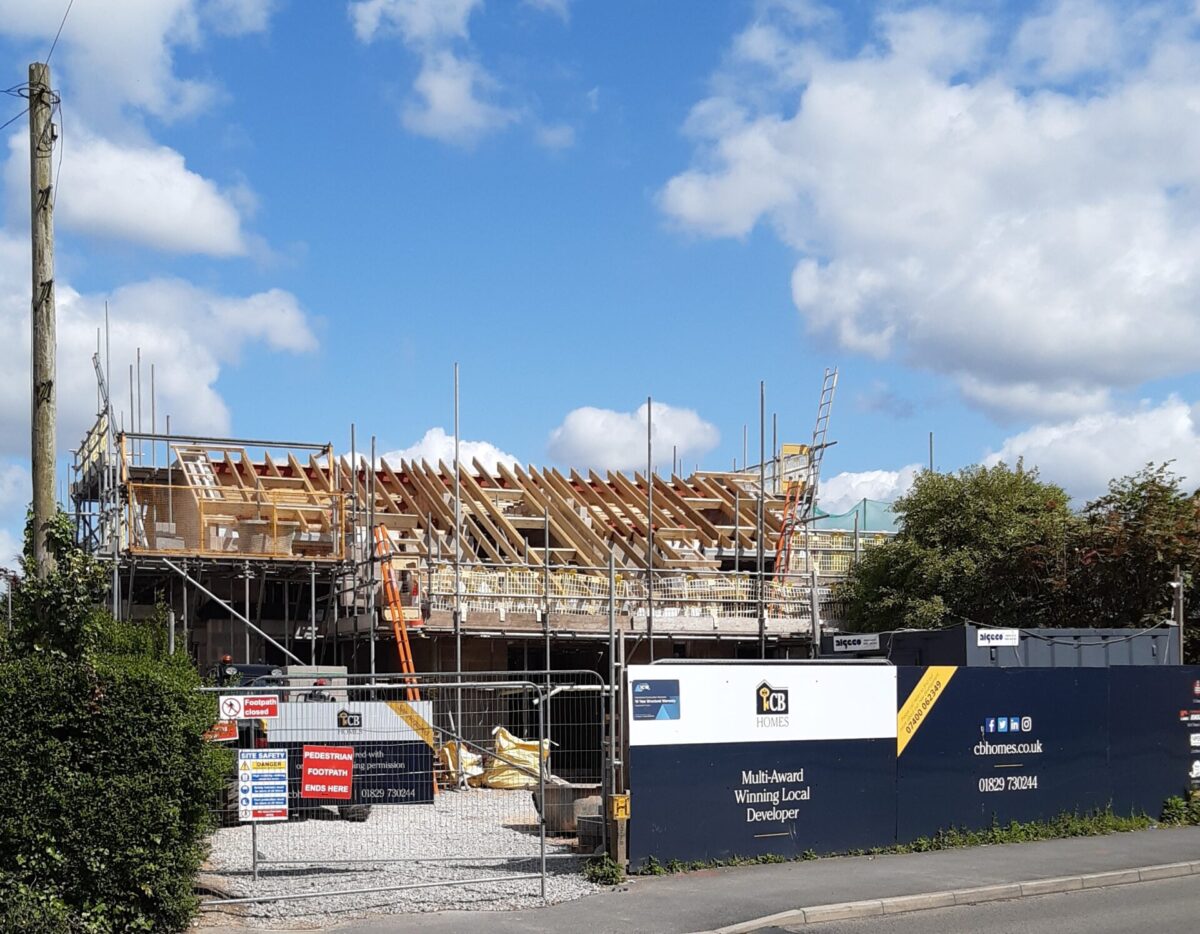
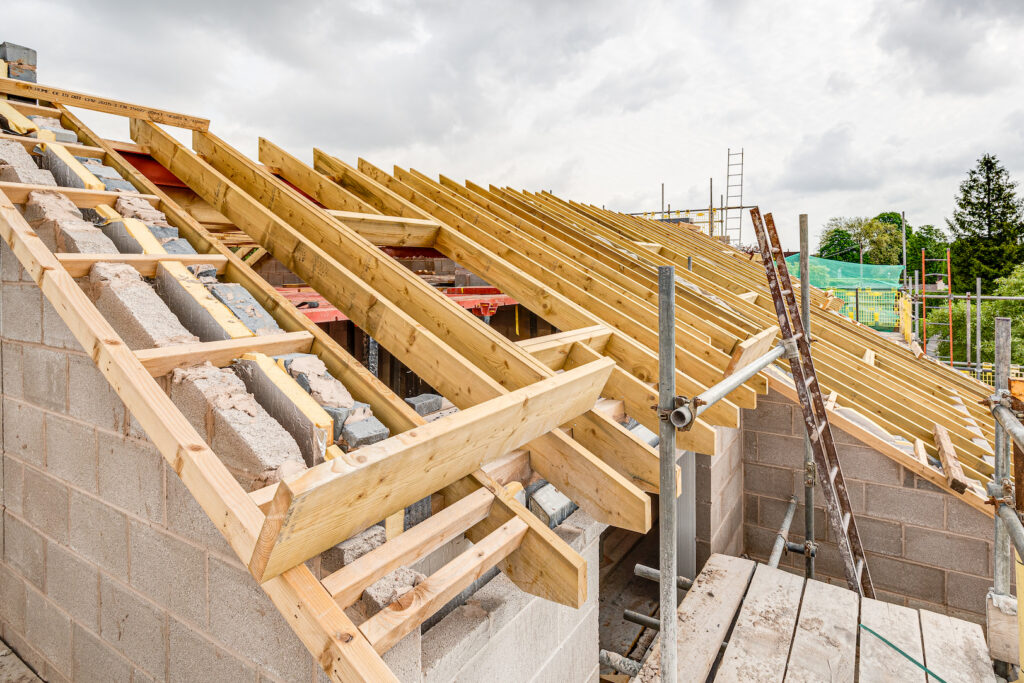
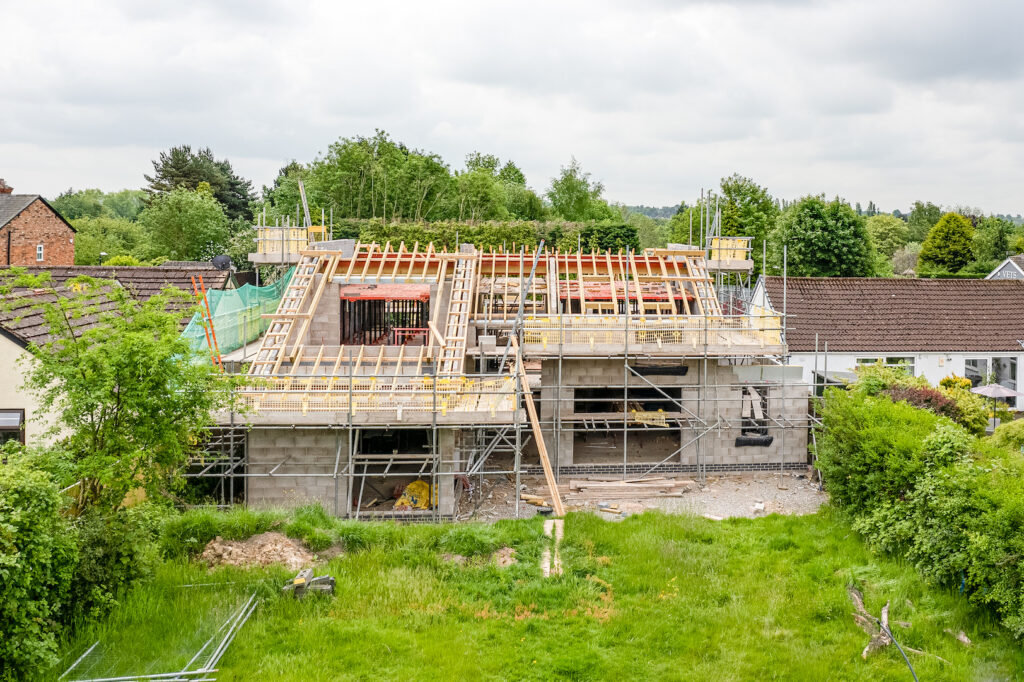
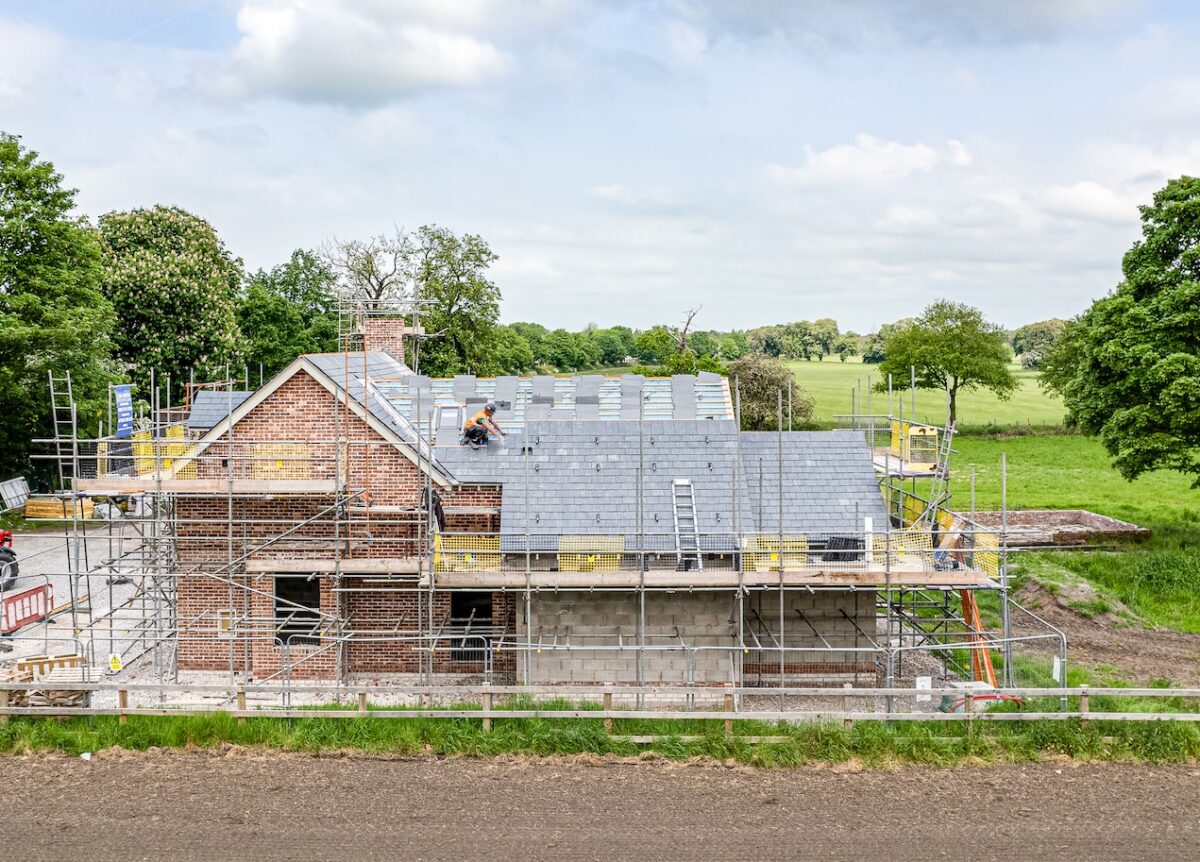
Our client Amy’s replacement dwelling is progressing rapidly. The roofers are now at work on this self-build project. At ground floor level you can see the layout of this beautiful Cheshire cottage coming together and upstairs, you can really get a good idea of what the rooms are going to look like.

Choosing self-build design options for traditional self-build cottage near Knutsford

Our client Amy’s replacement dwelling is progressing rapidly. The roofers are now at work on this self-build project. At ground floor level you can see the layout of this beautiful Cheshire cottage coming together and upstairs, you can really get a good idea of what the rooms are going to look like.

There have been a few minor delays because of the wet weather but Amy says it actually feels as if the build has progressed very quickly, with local people commenting as such to her.

Which design detail of the house do you like most so far?

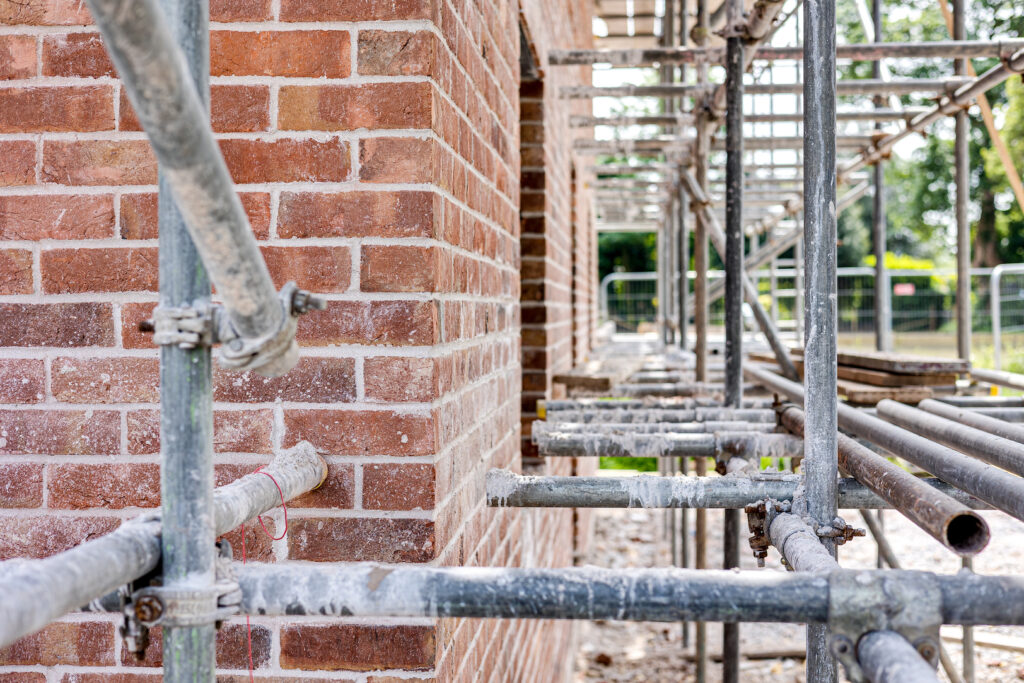
It may seem slightly strange to say this but actually it’s the colour of the bricks and mortar! This house is obviously a new-build but right from the start I said I didn’t want it to have that stark ‘in your face’ new-build look. We have also retained another, old building onsite, so I wanted the new house to look as similar as possible to this other building.

CB Homes was very helpful when it came to choosing the right bricks. Initially I wanted reclaimed bricks but they can be tricky as they don’t always meet building regulations standards and quite a lot apparently may be broken so it’s hard to find a batch of bricks big enough and it’s really important to get them all from the same batch for consistency. We needed a lot as I wanted enough for the house but also some for a garden wall too, so CB Homes worked it out and said we needed about 12,000 altogether.
Choosing bricks and mortar when you build your own home

The next thing to choose was the mortar – not just the colour of it but the style of the pointing too. The CB Homes bricklayer actually went to the extent of building us some mini sample walls to show me three different ways of finishing the pointing to give it different looks! That meant I could confidently make a really informed decision about the design detail. I am so happy with my choice as the house walls look great and tone really well with the older building that we have retained on the site.

CB Homes put me in touch with a brick merchant and I actually did a lot of driving around to find examples of what I wanted and I showed them lots of images. The one we have chosen is called a ‘reclamation style’ and it is more tumbled than a normal brick. I am so happy with this brick style as it sets the tone of the whole house.
What advice would you give someone embarking on a project to build their own home?

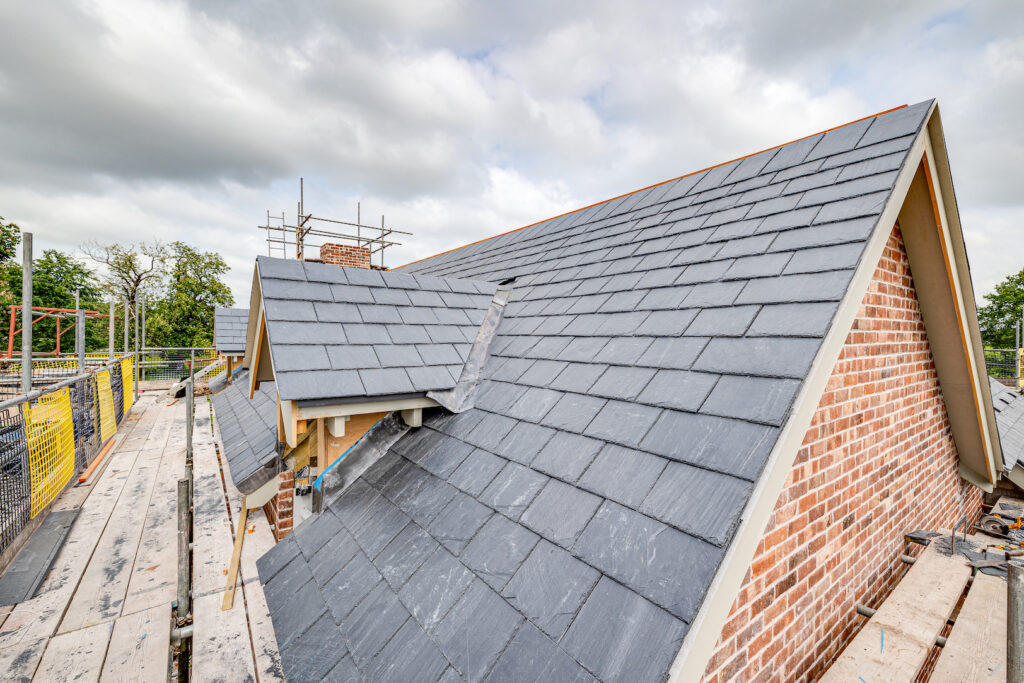
You may have to compromise on some things but if you do, try to embrace changes as a positive. One example of this for us was that due to planning, we were restricted on the ridge height of the roofs so our bedrooms will basically be in the roof. Initially, I was a little disappointed with that idea but now I don’t see it as a negative at all; we are going to have fabulous vaulted ceilings in our bedrooms and I have a whole Pinterest board dedicated to bedrooms with vaulted ceilings! It will actually work really well with the cosy vibe that we want to create with the whole house.

Getting every design detail of your self-build house just as you want it

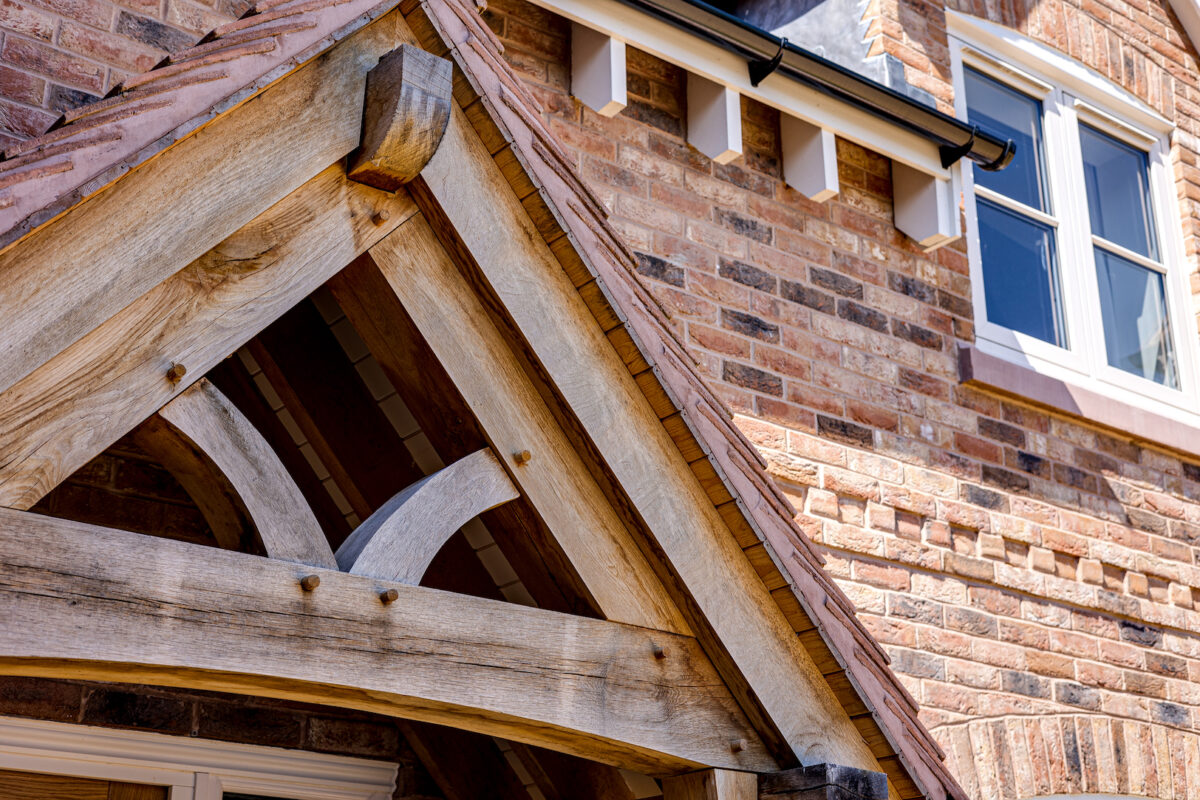
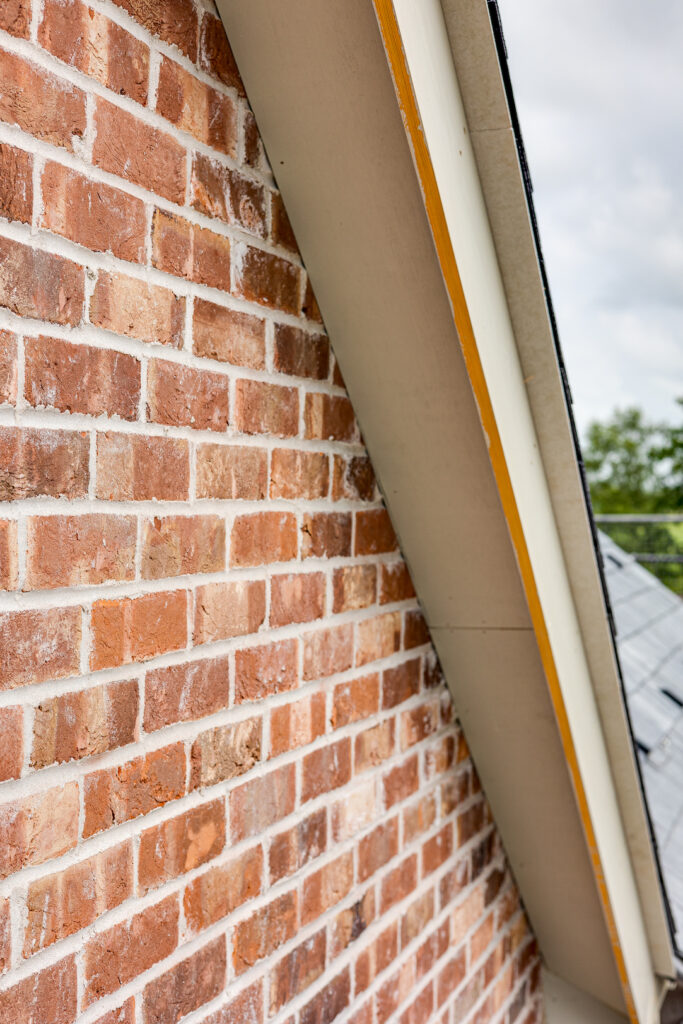
I called in to see the house recently and a trim had been fitted to the soffits and fascias. I was a bit worried as it was more intricately detailed than I thought it would be. After mentioning this to the site manager, he immediately said, “that’s not a problem, we’ll just take it off and change it to what you would like”. So, I’ve now had a meeting with the joiner and he’s going to change it to my choice instead.

This is just an example of how important it is to communicate with your build team at every stage and also of how great it is to be working with a company that really listens to its clients.
What’s next?

The scaffolding will be down soon and I can’t wait for the day it is removed – as I feel that will be the moment that the house is properly unveiled!

CB Homes is an A1+ member of the National House Building Council (NHBC), registered builder with the Local Authority Building Control (LABC), as well as a member of the Federation of Master Builders.

Each of our homes is backed by our unique and dedicated personalised approach to customer service. This ensures every CB Homes development delivers ultimate peace of mind to its new owner, long after we’ve handed you the keys.

If you have always dreamed of building your own home and planning every design detail, talk to us. Find out how we can help you design it, secure planning approval and carry out the whole build with our complete turnkey self-build packageContact us to find out more.

Room with a view: replacement dwelling project with balcony

Eight years ago, our clients, Dharmista and Jayme, purchased a bungalow in Timperley, with a plan to extend it to create a much bigger home. It soon became clear that there were significant problems, not only with the roof but also with damp throughout the property.

The previous owner had tried various remedial works to try and solve the damp problems but without success. Our clients decided that the best option for them would be to demolish the existing property and embark on a self-build project.

Eight years ago, our clients, Dharmista and Jayme, purchased a bungalow in Timperley, with a plan to extend it to create a much bigger home. It soon became clear that there were significant problems, not only with the roof but also with damp throughout the property. The previous owner had tried various remedial works to try and solve the damp problems but without success. Our clients decided that the best option for them would be to demolish the existing property and embark on a self build replacement dwelling project with balcony.

Our client Dharmista had a clear idea of the type of house she wanted to build. She wanted to create a very relaxed, warm and welcoming family home, making the most of natural light wherever possible.

The planned house is a 1.5 storey four-bedroom home, with a stunning balcony on the first floor, leading out from the master bedroom, with fabulous views across the garden. This design feature contributed to the somewhat lengthy planning process, with plans going back and forth between the architect and the planning office, with some minor adjustments needing to be made before permission could be granted.

Impact of pandemic on building schedule

Unfortunately, just as planning permission was secured, Covid-19 brought construction, including this self build, to an abrupt halt. Our clients were self-employed, running their own dental practice, so a major issue for them was concern over how to finance their project, with lockdowns in place and looking likely to continue. Dharmista says,

“As it was for many people, the financial impact for us was huge. Even when we could start working again, we could not open to full capacity; there was a lot of uncertainty, and then the planning permission ran out, so we had to apply all over again. It was very stressful.”

Fortunately, this time round, the planning application was processed rapidly. Dharmista approached CB Homes, along with a couple of other builders, to see if we could carry out the construction for her. Dharmista says,

“CB Homes has just been brilliant and so easy to deal with. I liked the look of CB Homes’ houses from their brochure but had assumed the company would be much too expensive. In fact, their quote was very reasonable and I just liked their whole approach. They were very patient and also very supportive and helpful when we had a few issues to sort out with our self build mortgage.”

Living alongside a replacement dwelling project

Our clients had initially planned to live in a static caravan on-site but after discussions with the CB Homes site manager, it was agreed that this was not a practical option as there is not enough space at the site to be able to do this safely. The family is renting a house close by, which means they can easily drop by and see how their replacement dwelling project is progressing.

Renewable energy options for a replacement dwelling project

CB Homes recommended a renewable energy expert, who talked through all the practical options for the new house with our clients. The new house will have solar panels on the roof and an air source heat pump. A ground source heat pump was not a feasible option for this property as very deep boreholes would have been required, which would have been prohibitively expensive.

We’ve been designing and building award-winning homes since 1981. From prestigious turnkey self build projects, to distinctive developments and exclusive barn conversions, each bespoke home is built to the same exacting standards.

CB Homes is an A1+ member of the National House Building Council (NHBC), registered builder with the Local Authority Building Control (LABC), as well as a member of the Federation of Master Builders.

Each of our homes is backed by our unique and dedicated personalised approach to customer service. This ensures every CB Homes development delivers ultimate peace of mind to its new owner, long after we’ve handed you the keys.

If you have always dreamed of building your own home, talk to us. Find out how we can help you design it, secure planning approval and carry out the whole build with our complete turnkey self build packageContact us to find out more.

Top ten maintenance issues to look for in new-build homes

There can be teething problems with anything that’s brand new and new-build homes are no exception. From small instances of cracking, to occasional issues with the heating and decoration, these problems are often more irritating than detrimental, but they still need to be addressed. In this blog, we’re going to look at the top ten maintenance issues that can sometimes be found in new homes.

New Build Maintenance Issues

There can be teething problems with anything that’s brand new and new build homes are no exception. From small instances of cracking, to occasional issues with the heating and decoration, these problems are often more irritating than detrimental, but they still need to be addressed. In this blog, we’re going to look at the top ten new build maintenance issues that can sometimes be found in new homes.

Cracking and gaps in new plaster

When new build homes are constructed, it will usually take around nine to 12 months for the entire structure to dry out. It’s not unusual to spot small cracks in the walls, often along hairline joins, such as plasterboard edges, or in corners of ceilings. Joinery too, such as skirting and architrave, can show gaps and these are a sign of shrinkage. They can easily be concealed using a gap filler and a coat of paint. As a tip, gaps can be reduced in the drying process, by allowing the new construction to dry out gradually.

Silicone sealant maintenance issues in new homes

Silicone sealant – around windows for example, or sanitaryware – should be smooth and secure in your new home. Sealant is designed to create a barrier between a wall or tiles and a component, such as a window frame or bath. When it’s not a true seal, it can cause problems. Water ingress is the most common issue and also the most damaging. If water can penetrate the seal, it can cause damage over time to timber and plasterwork of a new house. Another common fault with sealant is shrinkage. This causes the sealant to reduce in dimensions and pull away from where its fixed, leaving a clear gap for moisture to penetrate. Simple repairs can be done by taking out and replacing the problem sealant with new.

Doors and door frames of new builds

We’ve all moved in to a new home somewhere and found that there’s that one irritating door that doesn’t shut properly. The paint’s too thick, or the lock’s not quite reaching the receiver. This can be caused by warping. This usually occurs where there’s a rise in the humidity. A common place to find a warped door, even in old houses, is on the airing cupboard or bathroom door, where there’s a contrast between temperatures. It is caused by moisture in the air soaking into the wood. It is most common in external and bathroom doors, which is why it’s imperative to have adequate ventilation, especially in bathrooms. Door frames themselves can crack when the wood swells due to moisture and then reduces as it dries out. This ongoing process can cause the frame to buckle and can even cause problems with the wall.

Misaligned or stiff patio doors in a new house

Another door-related problem relates to patio doors. Misalignment can develop over time due to gravity, and warping of the frame can occur, due to expansion or shrinkage. Patio doors, especially the type that meet and close in the middle, are awkward to hang. Getting both doors to meet and close perfectly in sync is an art in itself. But if the doors become difficult to open or close, this can make the door stiff and difficult to use. As the tolerances are set within very fine degrees to reduce draughts, an expansion of a couple of millimetres can cause major problems. It may mean that over time, the doors need to be planed and rehung. 

Boiler maintenance issues

Newly-fitted boilers in new houses can take some getting used to, especially when they’re making noises, such as gurgling, whistling, tapping or banging. If a boiler is making noises above what you’d expect when it’s operational, it’s probably got air trapped in the system. Unless the problem is obvious, you’ll need a heating engineer to look at your boiler. Low water pressure could be another cause and venting/bleeding your radiators can stop them gurgling when in use.  That knocking sound you hear when the system kicks in is the expansion and contraction of heating pipes. Nothing can be done about this, but make sure pipes are not fixed with brackets to floorboards, skirting or joists too tightly, which will be constraining their movement.

Radiator issues

Another common fault with new-builds can be where radiators don’t function properly. This can either be them getting only partially warm or not getting hot at all. This is usually caused by air trapped in the system. A heating engineer can help you out, but it’s usually simply a case of ‘bleeding’ the radiator. This opens a valve, that allows the air to escape and the heat to flow properly, as now the heated water can pass freely around the system.

Painting and decoration of a new house

When it comes to decoration, painting touch-ups are among the easiest of maintenance jobs. With a new-build, there may be some areas that need another coat, due to patchy coverage, or to cover up after settlement cracks or making good after a minor leak. It’s a good idea to make sure that you have a supply of any paint that was used in the decoration, so you have an exact match. You should be able to ask the contractor which specific make and colour was used.

Condensation forming in your new home

New builds in particular are susceptible to condensation, as the building dries out.  This can be exacerbated by the use of boiling pans, showers, or drying clothes on airers. Use any ventilation you may have, or open windows if not, to allow the air to circulate and condensation droplets to dry out. If condensation is allowed to linger, it can cause mould.

Windows on new builds cause common maintenance issues

A further problem with windows is loose or broken handles, and stiff, broken or dropping hinges. These can be irritating, but can usually simply be replaced. Many windows come as units these days, but individual components can be ordered and replaced if need be. Sometimes a window that isn’t working correctly needs something as straightforward as the screws tightening up on the brackets.  

Scratches to glazing on new windows

Another window-related fault in a new home can be scratches or marks on the glazing. A scratch is difficult to rectify, especially in layers of double-glazing which will need the pane replacing. Marks and blemishes however can generally be removed using a window cleaning solution. 

Toilet flush, another maintenance problem

Any newly-fitted sanitary goods can cause problems, from dripping showers to stiff taps. One of the most problematic items is toilet flushes. Sometimes they can be stiff to operate, but more often it’s the cistern refill part of the process that causes problems – being too noisy, dripping after the cistern is filled, or the handle or push button not operating properly. As with other plumbing snags, it’s best to engage a professional engineer to rectify this maintenance fault.

We’ve been designing and building award-winning homes since 1981. From prestigious turnkey self-build projects, to distinctive developments and exclusive barn conversions, each bespoke home is built to the same exacting standards. We take great pride in every project we embark on to ensure the end result is as pleasing to its new owners as it is to us. This level of pride, passion and professionalism is epitomised in our craftsmanship and build quality, which has been recognised by many local, regional and national awards.

CB Homes is an A1+ member of the National House Building Council (NHBC), registered builder with the Local Authority Building Control (LABC), as well as a member of the Federation of Master Builders.

Each of our homes is backed by our unique and dedicated personalised approach to customer service. This ensures every CB Homes development delivers ultimate peace of mind to its new owner, long after we’ve handed you the keys.

Contact CB Homes today to discuss your next move.