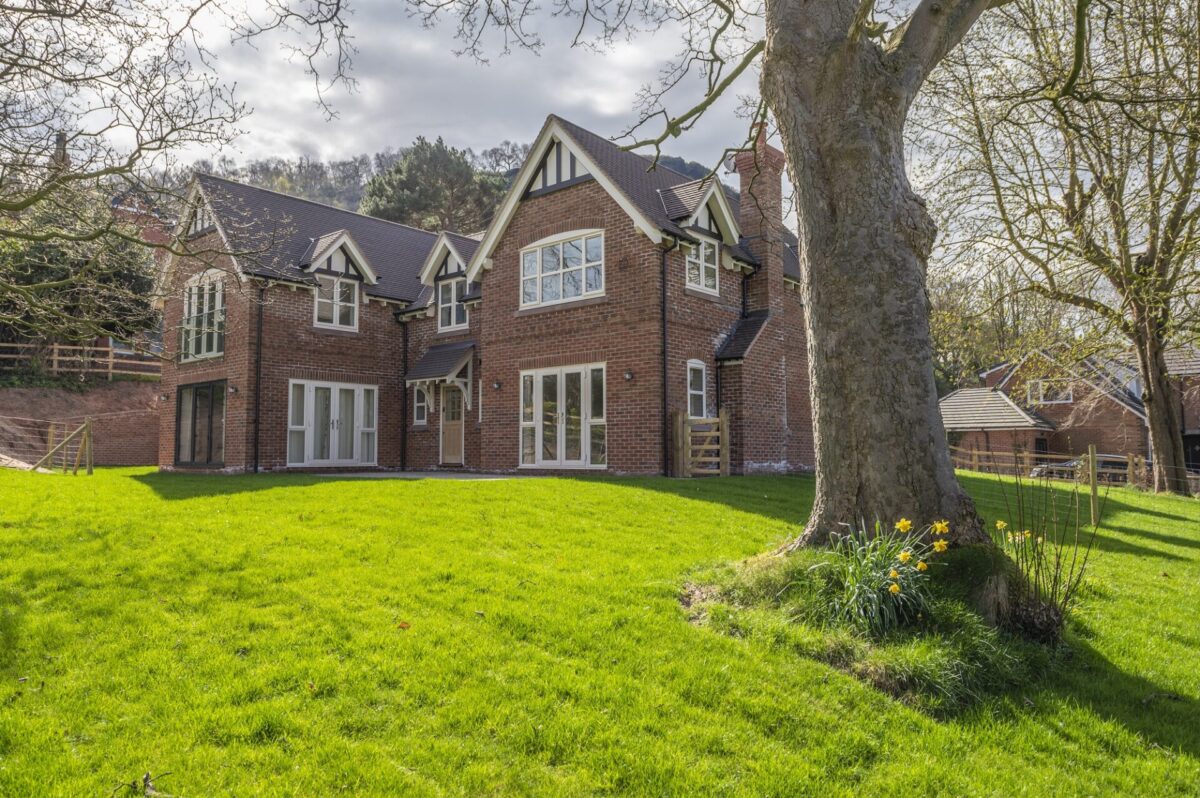
Whenever we see a new site, we always take note of the position of any trees in the vicinity. Trees can form a great backdrop to a property – and used well they can become part of the exterior landscaping – but they can also cause a variety of problems. Just because a tree is sited on a plot of land under your ownership, it doesn’t necessarily give you ‘carte blanche’ to do as you like with the tree, including trimming it or removing it from the site altogether.
Trees: protected species?
Trees in UK conservation areas are especially protected, but many trees have a variety of protection ‘rights’ when it comes to their existence. Chief among these is a tree preservation order, or TPO. These have been part of the Town and Country Planning Act in the United Kingdom since their introduction in 1947. Scotland has its own rules, but current tree preservation orders in England and Wales are made under the Town and Country Planning Act 1990 and the Town and Country Planning (Tree Preservation) (England) Regulations 2012.
The importance of registered documentation for trees
A TPO is decided by the local council’s planning authority to protect specific trees, for specific reasons in a designated area – be it in a garden, a roadside verge, part of woodland, or other rural feature. This is done to protect them from damage, if those trees are deemed to be an important amenity to the area, including older trees that are thought to be of historical or cultural significance. TPOs make it illegal to fell, lop, top, uproot or otherwise interfere or damage trees, without the express permission of the local planning authority – although different TPOs have different levels of protection with some permissions. Any details about TPOs on a land purchase will show up on the registered documents and should be checked as to what level of protection the trees have.
If a tree with an order on it is damaged, a local authority can bring a successful prosecution if it can show sufficient evidence. This includes evidence that the tree was protected by an order at the relevant time, or was sited in a conservation area. It will also have to establish culpability, beyond reasonable doubt. As a defence, in general it’s no excuse for the perpetrator to claim ignorance of the existence of an order. However for any prosecution to take place, the local authority should be clear that a valid order exists and that the tree in question was protected by it.
Exceptions to the rule for trees
There are a number of exemptions too. These include the felling or trimming of dead or dangerous trees to make them safe. The onus or responsibility here is on the person who authorises the work to prove that the tree was dead or dangerous. This can of course cause debate if the tree is felled and removed, as no proof remains of its current condition. Normally its state is decided by a report by a qualified operative before the work is carried out. There has been a great deal of storm damage across Cheshire and the North West in the last few months and it has become commonplace to see council highway staff felling, making safe and disposing of storm-damaged trees, some of which have fallen across roads and through services, such as telecommunication wires.
Other TPO exemptions include any work approved by the Forestry Commission under a felling licence or other approved scheme, or where there is an obligation under an Act of Parliament – e.g. to safely maintain a public highway for public use. Work can also be carried out at the request of certain agencies or organisations, which are specified in the order. There may also be an exemption to allow work to fruit trees which are cultivated in the course of a business for fruit production – providing the tree work is in the interests of that business. This means that all fruit trees are not automatically exempt, unless they are being actively used for a commercial enterprise business based on fruit production.
Permitted developments
Importantly from our perspective, tree works can be carried out where there is a direct need to work on the tree to allow a development for which detailed planning permission has already been obtained. This means that if, as a developer, you can present a convincing case for the trees to be removed, then you can address this before any development takes place.
If trees are protected to the extent that their removal is not permitted, then an imaginative designer can incorporate onsite trees into the overall landscaping finish. There is an appeals process too, where you can apply to a local authority to carry out work on a tree with a TPO, so there are many options available as a landowner and/or developer. Trees on site must be kept in mind at the design stage and also if their position will hinder or impede access or construction of the proposed project.
If you dream of building your own home, contact CB Homes to find out how we can help you.


