Finding a plot for a self-build to suit multi-generational living

Our new clients are both hospital doctors, who have just embarked on a self-build project in the lovely village of Weaverham in Cheshire.

They have been hoping to build their own house for years, but finding a suitable plot of land to fit their requirements has been a real challenge.

Our new clients, Roselin and Martin, are both hospital doctors, who have just embarked on a self-build project in the lovely village of Weaverham in Cheshire. They have been hoping to build their own house for years, but finding a suitable plot of land to fit their requirements has been a real challenge.

In India, where our clients are from originally, building your own house is far more common than it is in the UK, so making the decision to self-build was a very logical step to take, although self-building in the two countries is very different. Roselin says,

“Although many people build their own homes in India, we didn’t know how to go about it in the UK at all. There is far more regulation around what you can build and where you can build it here, but CB Homes has steered us through the process and we have learned so much in really quite a short space of time.”

Self-build advice from CB Homes

Roselin first got in touch with CB Homes some years ago and has continued to call on us for advice over the years.

Roselin explains,

“I have found several plots of land over the years but there has always been something not quite right about them. Either the location has not been very good or the price has been a bit too high for our budget.

“We do have quite specific requirements as we want to have room for our adult son, another doctor, who is currently working abroad but will need somewhere to live when he returns home. We also want to have suitable space to accommodate my mother-in-law, who has some mobility issues. We are planning for the longer term too and want to be sure that we can future proof our home for when we are both older as well.”

Multi-generational living: finding land

Room to grow….vegetables

Having a good sized garden is important to the couple as they enjoy growing their own vegetables and would like to be able to do that on a slightly larger scale than they can now. Roselin is a keen cook so the kitchen will really be the heart of the home too, where she can enjoy creating culinary delights with vegetables they have grown in their own garden.

Talking about the plot they have purchased, Roselin says,

“We were very excited when CB Homes got in touch with us to say that they had found a plot available with planning permission, if we would like to take a look at it.

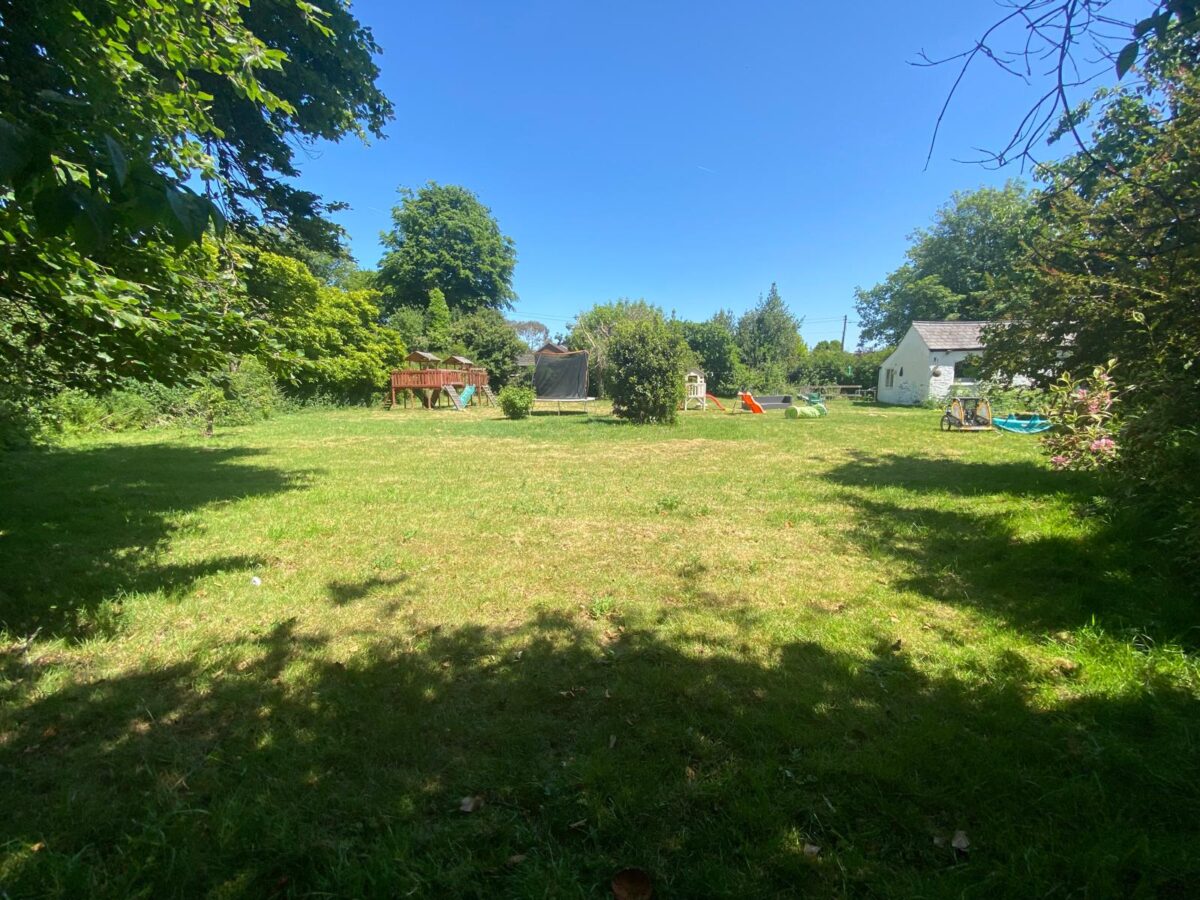
“The location, in the village of Weaverham, was much better than anything we had looked at before. It will actually make our commute to work in Crewe shorter than it is now. There is plenty of privacy without it being too remote, and a good amount of outside space for our gardening plans too.”

Building a multi-generational home

We will be tracking Roselin and Martin’s self-build project over the next few months in this latest blog series. Next, we will be looking at how they are financing building their own home.

Talk to us to find out how we can help you build your own home. We can help you design it, secure planning approval and carry out the whole build with our complete turn key self-build package

CB Homes is an A1+ member of the National House Building Council (NHBC), registered builder with the Local Authority Building Control (LABC), as well as a member of the Federation of Master Builders.

Contact us to find out more.

Shortage of land Part 2: Why is land for self-build so hard to find?

There’s an ongoing land shortage in the UK, which is making developers like us spend an inordinate amount of time searching for suitable building plots. There are many reasons this is happening. But in protecting our countryside and heritage, are we stifling development and the construction sector?

How to find land for self-build

There’s an ongoing land shortage in the UK, which is making developers like us spend an inordinate amount of time searching for suitable building plots. There are many reasons this is happening. But in protecting our countryside and heritage, are we stifling development and the construction sector? In the second part of our series on the shortage of land, we look at the reasons behind why land is so hard to find and the elements, legislation and restrictions that need to change to free up the market one again.

Driving the market for land development

One of the key factors is the simple fact that a great many of the prime plots of land have already been developed over the years. There was a boom that began in the 1960s and ran through to the 1980s that saw many people buy land or old property in villages and small towns, and develop them. The first housing price boom in the 1980s slowed the market – and the ability of landowners and developers to make a profit on such developments slowed. But over time, even with the huge rises in land and property prices since the 1990s, developers have continued to prosper, as demand drives the market. 

Saturation point for rural market?

Conservation and heritage remain important watchwords and rural development is still closely scrutinised by local authorities. This in itself in the past has been blamed for a lack of development potential in rural areas. The unlocking of these restrictions are seen as major factors in land shortages. However, property and land costs now are such – especially in a garden county like Cheshire – that many developers and owners are priced out of the market. It is no longer affordable for many to think about country living and many spots in villages have already been upgraded, and derelict property demolished, to make way for new-builds. We could be reaching a saturation point in this regard.

Land for building is a valuable commodity

There’s also the challenge of a glut landowners sitting on land that could be developed, but are not freeing it up for building. Land, like houses, is of course a valuable commodity and so-called Land Banking is a fact of the market. What is needed is an incentive, or levy, to ensure land that is owned is developed within a certain timescale. We are finding all these are factors in making it hard for our clients’ self-build dream to be realised.

Sea change and adapt land for building

In the last few years, changes to legislation such as Neighbourhood Plans is altering the shape of the English countryside too. Boundaries have moved, village parameters are greater, and developers are being allowed to build, build and build in villages and small towns as they never have before. This unprecedented sea change is a direct response to the need for more houses. Demand is high for these properties, which are quickly filled. What also needs to be addressed is ensuring infrastructure – often the last thought in government legislation – keeps pace with development. This means adequate and well-maintained roads and services, local amenities, things to do, places to go.    

Housebuilders rely on a healthy flow of plots to be developed to thrive. If this is stifled, by a perfect storm of a number of factors, then the construction market will eventually stall. At the moment, approved planning permissions are down since 2019 and momentum is being lost. There’s less homes being build and this is partly due to the lack of available land – we hope this will soon be acknowledged as a problem, to be addressed by the present government. 

If you have always dreamed of finding some land for building and building your own home, talk to us to find out how we can help with our complete turn key self-build package.

The Self Build Guide Part 1: Finding Land via Online Searches

Whenever you start looking at self-build as an option to create your ideal home, there are a number of steps you’ll need to take in the process. Self-building is an ambitious undertaking. However, it has some great positives and is a very rewarding way to construct a home you’ll love. Advantages include finding land exactly where you’d like to site your property, the size and layout (as long as it complies with Building Regs and planning) and, to a certain extent, setting your own timescales on how long you’d like the project to take.

Finding land via online search

Whenever you start looking at self-build as an option to create your ideal home, there are a number of steps you’ll need to take in the process. Self-building is an ambitious undertaking. However, it has some great positives and is a very rewarding way to construct a home you’ll love. Advantages include finding land exactly where you’d like to site your property, the size and layout (as long as it complies with Building Regs and planning) and, to a certain extent, setting your own timescales on how long you’d like the project to take.

Finding land – landing your perfect plot

Unless you already own a plot of land, the first stage of your project will be finding and purchasing land to build on. Over the next few weeks, we are going to be looking at the process of finding a plot of land and making sure it ticks the box requirements that will see your project completed.

Where do I really want to live?

Firstly, you need to decide on the geographical location. Would you like to live in the country, or would the suburbs and urban living suit you more?

In order to make a detailed, effective search, you need to pinpoint the area you want to live in. This will help create much more detailed search parameters – not too small, so that you are restricted, but not so large that you cannot refine your search further.

It’s useful to make a wishlist of what you need from your ideal location. Don’t forget key factors that will influence your decisions. These include being close to good infrastructure links, such as motorway access, other major roads, bus routes and railways. If you are searching for a rural idyll, you may not have to compromise on this as even villages and smaller towns can still be well connected if they have a railway station. If your work takes you abroad, having an airport nearby might be a positive rather than a negative.

As well as the essentials for many, such as good schools and reliable shops, think about your hobbies and what you do in your spare time. Do you love the idea of a local pub to relax in or are you a real foodie who would like to be able to walk to a great restaurant? Are there good dog walks close by? If you are into fitness, are there some good running routes or a gym in easy reach?

Online search for land

Once you have established your ideal location, perhaps the simplest way to seek out available land is to use an online land search. There are a variety of online plot-finding websites that are free to access and can be easily navigated. You can search by region or postcode, and hone the search according to your budget. You may need to create an account and log in to do this. Your search parameters will filter out inappropriate options and provide you with a short or longlist of likely sites.

If the online ‘plot finder’ sites don’t highlight any likely options, auction sites can also be useful too. You’ll be able to check things like acreage, infrastructure and services in the locality, but there’s really no substitute for going out and getting a ‘feel’ for the land and its surroundings in person.

Some of the principal UK land and auction websites include:  

www.rightmove.co.uk

www.myplot.co.uk

www.plotfinder.net/

www.plotbrowser.com

www.onthemarket.com/farms-land/

www.ukauctionlist.com/land-auction

www.perfectplot.co.uk/

Other websites that are not land-specific are also useful starting points for land searches. These can include auction, marketplace and selling sites, such as:

Gumtree https://www.gumtree.com/

eBay https://www.ebay.co.uk/

Trovit https://www.trovit.co.uk

Craigslist https://geo.craigslist.org

With plot finding sites and auctioneer listings, you may find it’s worth signing up to their small subscription fee, in order to receive weekly or monthly updates of land available. In this way, you’ll keep up-to-date with what’s available and see what’s selling, what isn’t and where the hotspots are when it comes to development land.

Gaining insight

Another useful online tool is online land software. The two main ones are Nimbus Maps and LandInsight. These are specialised land finding software that are used by many developers and land agents, but are available to the public for a fee. If you are serious about finding that perfect plot, it may be worth the investment. These can be helpful but you will need some background knowledge of planning policy. We’ll be providing more detail on how to negotiate your way through the planning policy minefield in future blogs. Watch this space!