Land for development: land values and ownership

Where to start when it comes to land for development.

Here at CB Homes, we acquire land for development for small and exclusive developments. We can carry out the process of buying and developing land from start to finish – from sourcing and purchasing the land, submitting planning applications to the actual build itself. We do this for private clients for bespoke homes, but we also work on wider projects, such as small and medium-sized housing developments, often in rural areas.

There has been much written in the media and industry press over the last few years over the development of land and its availability to developers. Some residents may see new development as an enriching positive for their community, leading to improvements in local amenities, investment and infrastructure, while others residents may feel they do not want a new development next to their property.

In this new series of blogs, we’re going to explore how we acquire land and the process we go through to develop it, including what sort of development is permitted and what is not.  

Locating potential sites for development

We find out about land for sale in a number of ways – from seeing listings in online marketplaces, such as On the Market or Rightmove, by being informed by a landowner about areas of land we might be interested in, by one of our land team driving past a piece of land and seeing development potential, or by our land agent contacts. Regional online searches – for example searching for ‘Cheshire’ – of On the Market, will give an indication of land availability and price.  https://www.onthemarket.com/for-sale/land/cheshire/

Who owns land for development?

All land in the UK is owned by someone, be it part of a wider country estate, landed gentry, the King or individual private ownership.

Land Law and ownership is a huge subject, but put simply, land can be owned by a single freeholder, or people can own land jointly. The law closely regulates the circumstances under which each may sever or sell their share of the land, and some land may be leased or licensed to other users and owners, for their own intentions.

Registered interests: title deeds

To find out who owns an area of land, it’s useful to consult the Online Land Registry. You will have to register to use it, but for us it’s an essential part of our research into finding suitable land for development.

Online Land Registry services are accessible 24 hours a day, every day of the week. They can be used by commercial public organisations and members of the general public too. You can request property title and land title deeds online, via Land Registry UK. Conveyancers may use the facility, for example, in the course of a house purchase that has land attached, to discover if the land has any covenants or rights of way attached.

To find out title deed information, you can select the land title deeds that we require, by entering the location details into the land registry. You will then receive electronic copies of the title deed documents via email, often as a same-day service.

What’s included in title deeds information?

Details included will cover documents outlining property boundaries, the present owner’s details, a physical description of the land and details such as restrictive covenants, wayleaves and easements.

Values and worth of development land

The value of land goes up and down, in exactly the same way as house prices and other commodities vary. They’re affected by demand, inflation and things like bank interest rates.

How is land for development bought?

Land is a commodity, and people buy it for investment as well as to use. Land can be bought in exactly the same way as you would buy a house, from an agent for an agreed fixed price. The value of the land will be improved if it already has planning approval or permission. For much more information on land acquisition, it’s worth heading over to the Online Land Registry to see the process for yourself.

If you have an area of land, in Cheshire or its environs, that you think might be suitable for development, then contact our team today to find out about selling your land.
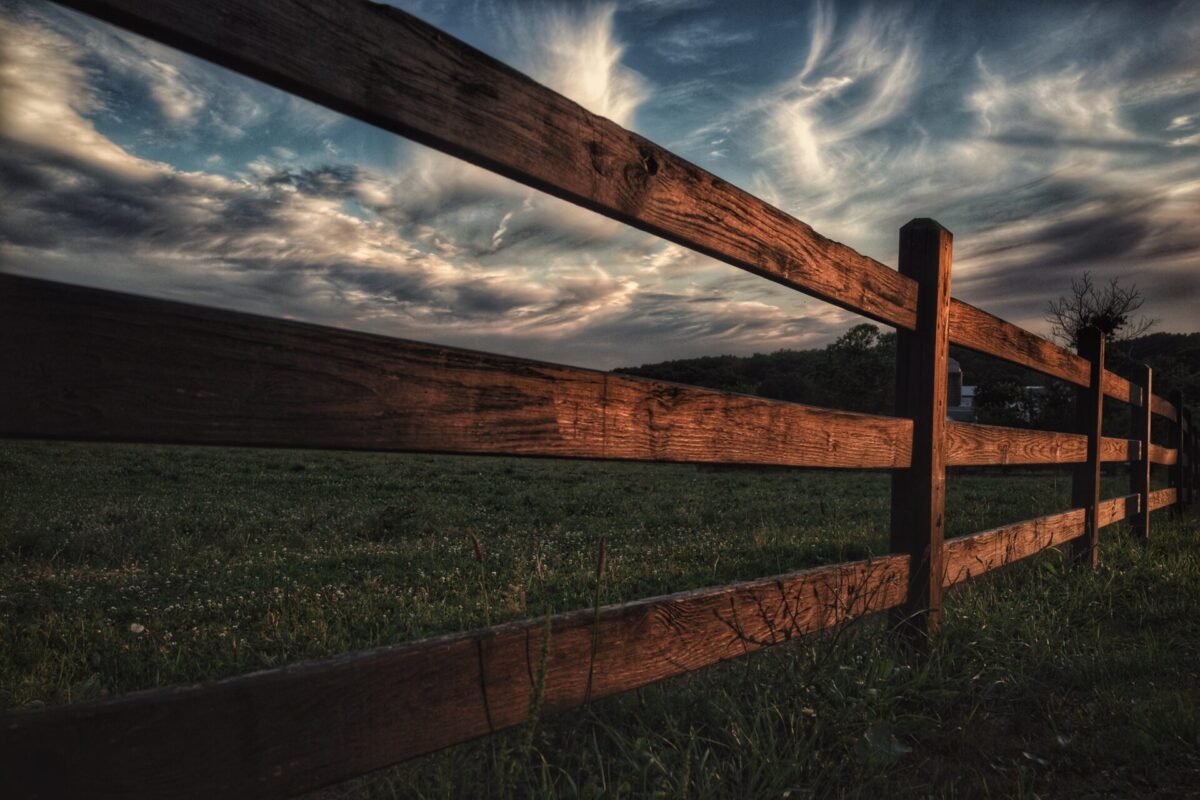
Rights and boundaries to a plot of land: Know your limits

If we are looking at buying a plot of land or we want to sell our land at any point, we need land borders to be clearly defined. It’s often when a land sale takes place that changes to boundaries come to light – but by then it may be too late to do anything about it.

How to identify boundaries of a plot of land

If we are looking at buying a plot of land or we want to sell our land at any point, we need land borders to be clearly defined. It’s often when a land sale takes place that changes to boundaries come to light – but by then it may be too late to do anything about it.  Perhaps the most contentious aspect of any land ownership is the exact extent of a plot and who has access to it.

Registered land ownership

Land registers are where a plot’s extent is recorded, but the real world is seldom like line drawings, plans and maps. HM Land Registry will tell you exactly who owns a piece of land, but the exact perimeter may still be up for discussion or heated debate. Fences are erected, walls are built and hedges and trees grow. Over time, the borders between properties can become blurred and the exact point where one starts and another ends can be difficult to see.

In England and Wales, often there’s no record of the exact boundary between neighbouring properties, or who owns a division such as a hedge, party wall, fence or tree (party walls are walls which you share with your neighbours in a terrace or semi-detached, but they can continue outwards to become boundary walls). Boundaries are set by the deeds of the property. You can contact the Land Registry to get the exact boundary determined, but if your neighbour disagrees with you on where it is, this can be an expensive and time-consuming process.

Pushing the boundaries

Usually, a change of land ownership will have to be done with a sale of the land. But there are instances when land ownership can change subtly, like when someone moves a fence when a new set of panels are fitted and pinches a few inches of land. If this is done blatantly, it can amount to a foot or a metre. And if you don’t complain – or even notice it, there may be plants for example obscuring it – for a period of time, they could then legally claim to be the owners and occupiers of the land. That’s when things get complicated, as you have to prove that the strip of land now on their side of the border used to be yours. A dispute of this kind can prove costly and often take years to resolve, which is no help if you are looking to sell your land in the interim.

Adverse possession

This type of land ownership is called ‘adverse possession’, where land is stealthily appropriated for longer than 10 years by someone other than its owner. It happens more often in rural areas, where boundaries are less clearly defined, and often happens when gardens border onto fields, hedgerows, heath or moorland, or parcels of woodland. The area at the bottom of the garden can become adopted as the landowner’s own – garden waste and grass cuttings might be dumped there, for example, which enables the perimeter to creep into the farmland. You sometimes see this type of encroachment on canals too, where narrow boats with more established moorings begin to set down roots on the riverbank, with the pitching of tables and chairs, etc. Eventually the encroachment becomes permanent and part of the landowner’s property. 

Rights of way

Another challenge to land ownership can be with shared spaces and ones that grant rights of access. A shared garden or courtyard is everyone’s to use and so cannot be sold as part of a single property. Any owner would have to understand that outdoor space was a shared commodity. This includes shared driveways too.

Often a piece of land has a granted access to the public. People have a right to access land for walking, or certain other leisure activities. The public always have access to public roads and pavements (this includes narrow lanes and unnamed roads, if they are not private) or public rights of way, for example footpaths or bridleways. People can exercise their ‘right to roam’ on open access land, including mountains, moors, heaths, downs, common land and some land around the Coast Path too.

You can also access private land if the land used to be a public right of way in the past (you can check this on old maps and documents), the land has been accessed by the public for at least 20 years and nobody has asked them to stop, or the landowner has granted ‘permissive access’. Any access points will need to be clearly defined, so that access doesn’t become trespass. This will all need to be stated clearly however when the land is sold into new ownership and a professional land buyer will know what to do and where both buyers and sellers stand.  

Any of these disputed or contentious aspects regarding land and boundaries can cause problems when it comes to selling a piece of land or a property with land around it. It’s always a good idea to appoint someone who knows the ins and outs of land sales and ownership. If you think the land you have has issues with its boundary or access, CB Homes can help with this. We are always on the lookout for suitable land to purchase – whether a small single plot, a large site or a redundant building with land around it. If you’d like guidance and advice on a land sale, then contact us today.