On your doorstep – the importance of a site’s location

As an integral part of its housing strategy, the new government has made building a priority. We’ve looked at how the building planning process is changing, to encourage more houses to be built, and more permissions to be granted. One of the key issues is the location, where these new homes will be sited.

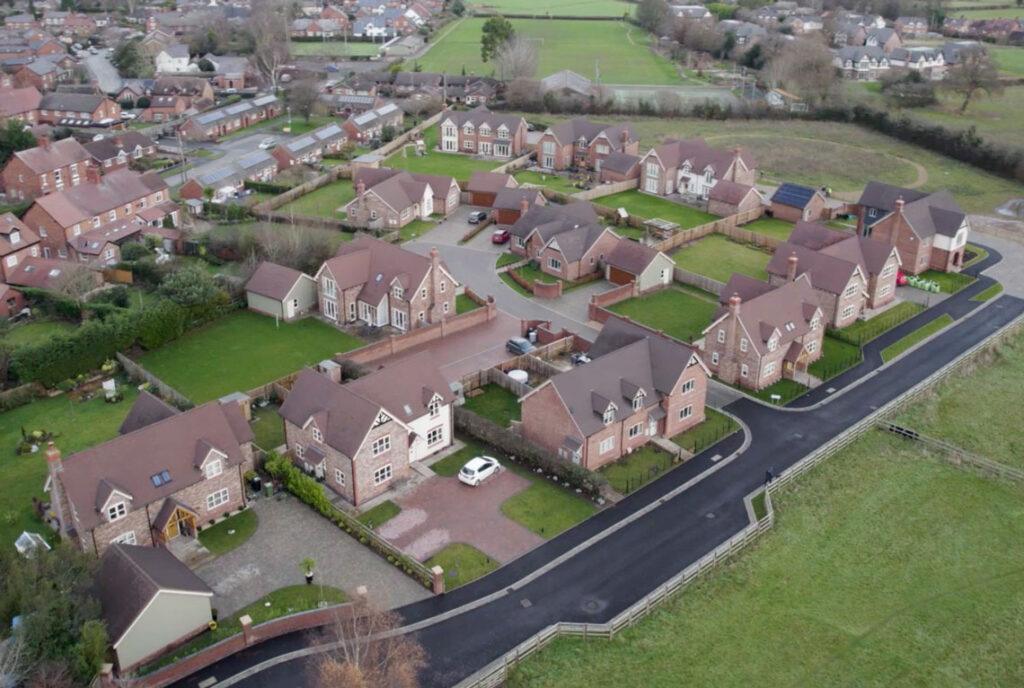
It’s important that new housing developments feel part of their local area, enhancing both the environment and the community, and making them attractive places to live. Making the most efficient use of the land available is also important, so in this blog we’re going to look at the positive impact new properties can have on communities in all kinds of ways.
Building for convenience and community

When planners are considering new development applications, one of the things they look at is the impact it will have on the area. Ideally, new properties should have readily available amenities nearby. This can be shops, such as a general store or newsagent, but can also be schools and easy access to a doctor’s surgery. Having these offerings and services on your doorstep will make a big difference to how attractive new developments are to potential buyers. The approval of new housing development also encourage investment into an area and amenities such as community hubs and cafes can spring up as a result.
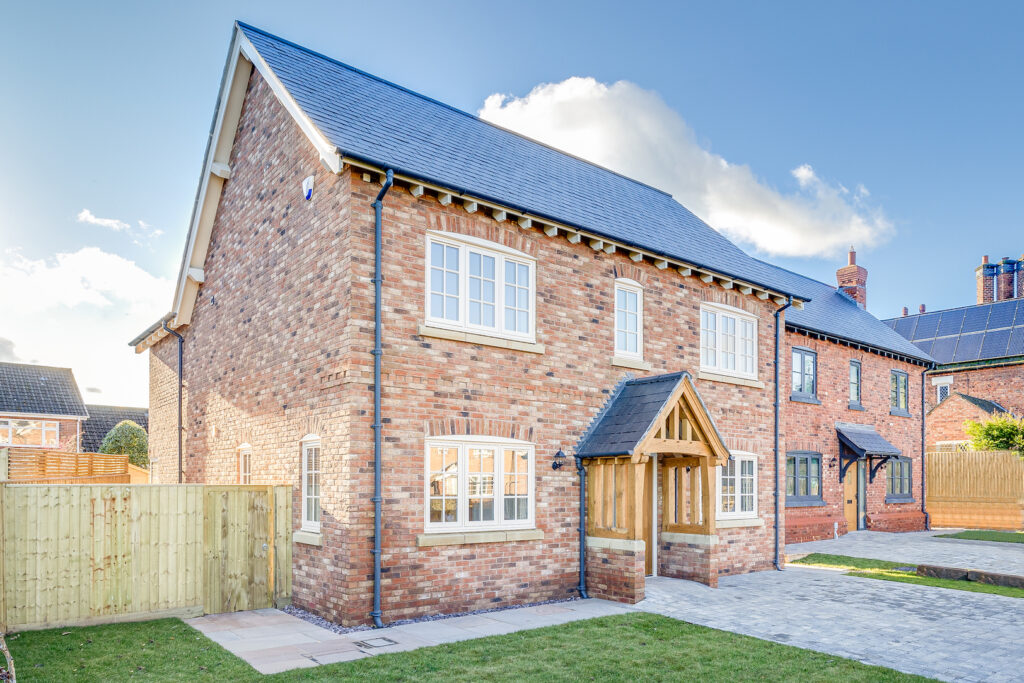
Connectivity is another aspect to look at when exploring sites for new homes. The road network, particularly in rural areas, was originally designed for less traffic that it takes nowadays. But it can usually cope with a degree of development, as it is often only certain times of day – the rush hour periods and school run for example – where roads can sometimes become congested. Improvements to roads can often be incorporated into new developments, with junction upgrades or pedestrian crossings, for example. Aspects such as drainage and sewer output will also have to be taken into account, as more houses will increase the capacity required.  

Staying connected

Being on a bus route or near a railway station are also positives when looking at siting new developments. A good bus or train route can make up for a lack of amenities on your doorstep. It’s also essential for residents who don’t drive or own their own car, schoolchildren or elderly people for whom services close by are so important. Planners have to take all these factors into account, so that developments improve communities.
A location designed for living

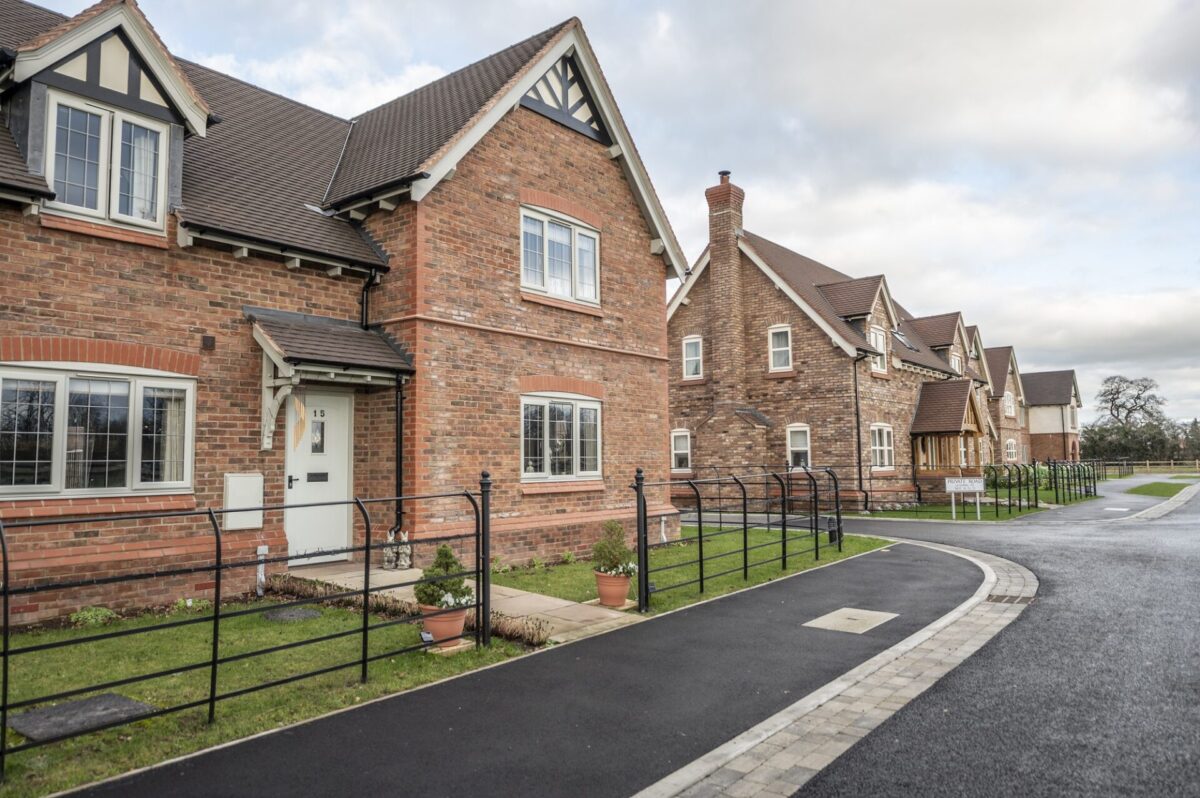
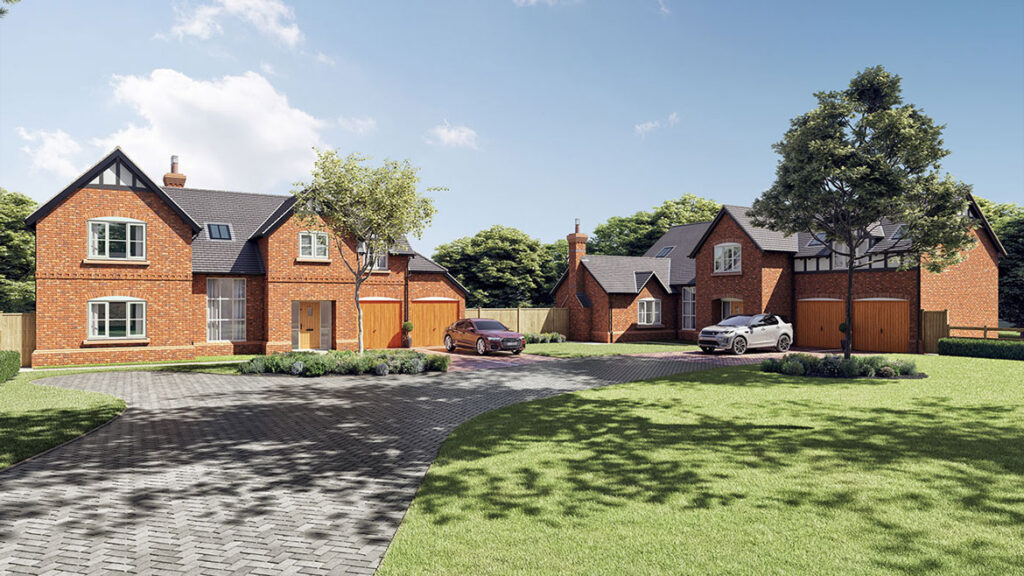
The types of properties included in developments should reflect community needs and demand. High-quality developers strive to make the most of the acreage available, so efficient and imaginative design is an essential part of their developments. The designs should also match the needs of the area too. For our developments, we design homes that people fall in love with and want to live in. We mix traditional styles with modern materials and knowhow, to create our take on country living of the highest quality.
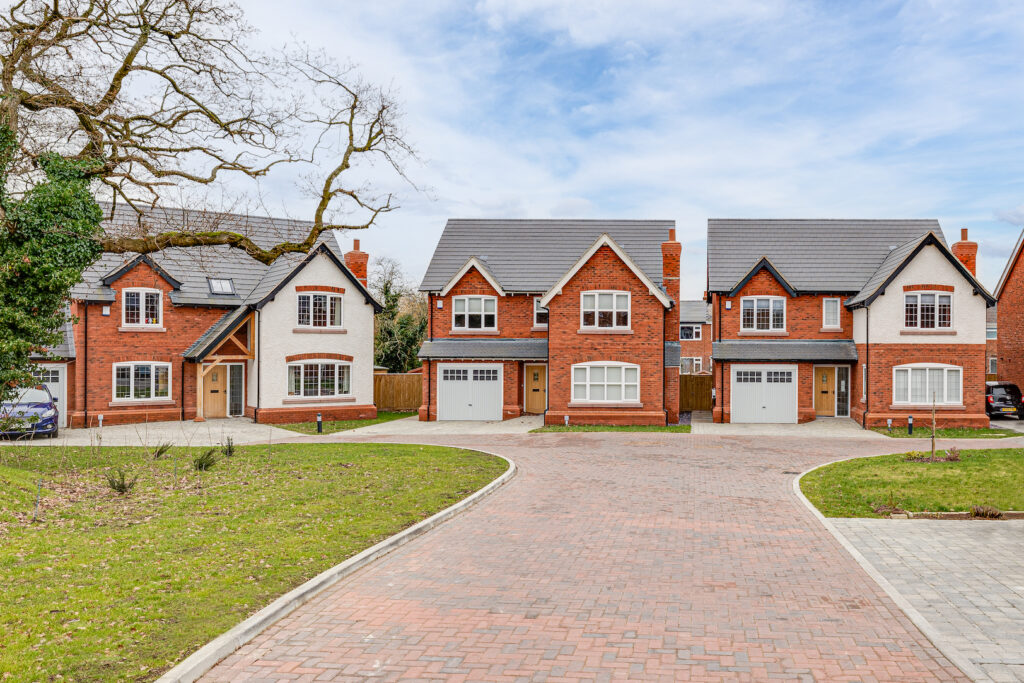
At CB Homes, we transfer that ethos into all of our properties, be they rural, urban or suburban. We design properties that make the maximum use of the land available.

When it comes to developments, the possibilities are endless. Sometimes we are designing large family-style detached properties, but often on multiple-property developments, mews-style or semi-detached dwellings make more sense – both from a building perspective (shared walls, adjoining roofs, less materials, uniform design) and for buyer appeal too (affordability, sense of community, attractiveness of design).

We have also incorporated apartments in some of our developments where ground space is often at a premium. It’s also important to take into account access and mobility issues – single-level living areas, for example, for residents with accessibility challenges, such as the elderly, infirm or people with disabilities. It’s about getting the balance right between building a house and making a home, and many factors feed into the ideal plot’s location.

If you own land, in Cheshire or close by, that you think might be suitable for development, please contact us today.

Land for development: land values and ownership

Where to start when it comes to land for development.

Here at CB Homes, we acquire land for development for small and exclusive developments. We can carry out the process of buying and developing land from start to finish – from sourcing and purchasing the land, submitting planning applications to the actual build itself. We do this for private clients for bespoke homes, but we also work on wider projects, such as small and medium-sized housing developments, often in rural areas.

There has been much written in the media and industry press over the last few years over the development of land and its availability to developers. Some residents may see new development as an enriching positive for their community, leading to improvements in local amenities, investment and infrastructure, while others residents may feel they do not want a new development next to their property.

In this new series of blogs, we’re going to explore how we acquire land and the process we go through to develop it, including what sort of development is permitted and what is not.  

Locating potential sites for development

We find out about land for sale in a number of ways – from seeing listings in online marketplaces, such as On the Market or Rightmove, by being informed by a landowner about areas of land we might be interested in, by one of our land team driving past a piece of land and seeing development potential, or by our land agent contacts. Regional online searches – for example searching for ‘Cheshire’ – of On the Market, will give an indication of land availability and price.  https://www.onthemarket.com/for-sale/land/cheshire/

Who owns land for development?

All land in the UK is owned by someone, be it part of a wider country estate, landed gentry, the King or individual private ownership.

Land Law and ownership is a huge subject, but put simply, land can be owned by a single freeholder, or people can own land jointly. The law closely regulates the circumstances under which each may sever or sell their share of the land, and some land may be leased or licensed to other users and owners, for their own intentions.

Registered interests: title deeds

To find out who owns an area of land, it’s useful to consult the Online Land Registry. You will have to register to use it, but for us it’s an essential part of our research into finding suitable land for development.

Online Land Registry services are accessible 24 hours a day, every day of the week. They can be used by commercial public organisations and members of the general public too. You can request property title and land title deeds online, via Land Registry UK. Conveyancers may use the facility, for example, in the course of a house purchase that has land attached, to discover if the land has any covenants or rights of way attached.

To find out title deed information, you can select the land title deeds that we require, by entering the location details into the land registry. You will then receive electronic copies of the title deed documents via email, often as a same-day service.

What’s included in title deeds information?

Details included will cover documents outlining property boundaries, the present owner’s details, a physical description of the land and details such as restrictive covenants, wayleaves and easements.

Values and worth of development land

The value of land goes up and down, in exactly the same way as house prices and other commodities vary. They’re affected by demand, inflation and things like bank interest rates.

How is land for development bought?

Land is a commodity, and people buy it for investment as well as to use. Land can be bought in exactly the same way as you would buy a house, from an agent for an agreed fixed price. The value of the land will be improved if it already has planning approval or permission. For much more information on land acquisition, it’s worth heading over to the Online Land Registry to see the process for yourself.

If you have an area of land, in Cheshire or its environs, that you think might be suitable for development, then contact our team today to find out about selling your land.

Rights and boundaries to a plot of land: Know your limits

If we are looking at buying a plot of land or we want to sell our land at any point, we need land borders to be clearly defined. It’s often when a land sale takes place that changes to boundaries come to light – but by then it may be too late to do anything about it.

How to identify boundaries of a plot of land

If we are looking at buying a plot of land or we want to sell our land at any point, we need land borders to be clearly defined. It’s often when a land sale takes place that changes to boundaries come to light – but by then it may be too late to do anything about it.  Perhaps the most contentious aspect of any land ownership is the exact extent of a plot and who has access to it.

Registered land ownership

Land registers are where a plot’s extent is recorded, but the real world is seldom like line drawings, plans and maps. HM Land Registry will tell you exactly who owns a piece of land, but the exact perimeter may still be up for discussion or heated debate. Fences are erected, walls are built and hedges and trees grow. Over time, the borders between properties can become blurred and the exact point where one starts and another ends can be difficult to see.

In England and Wales, often there’s no record of the exact boundary between neighbouring properties, or who owns a division such as a hedge, party wall, fence or tree (party walls are walls which you share with your neighbours in a terrace or semi-detached, but they can continue outwards to become boundary walls). Boundaries are set by the deeds of the property. You can contact the Land Registry to get the exact boundary determined, but if your neighbour disagrees with you on where it is, this can be an expensive and time-consuming process.

Pushing the boundaries

Usually, a change of land ownership will have to be done with a sale of the land. But there are instances when land ownership can change subtly, like when someone moves a fence when a new set of panels are fitted and pinches a few inches of land. If this is done blatantly, it can amount to a foot or a metre. And if you don’t complain – or even notice it, there may be plants for example obscuring it – for a period of time, they could then legally claim to be the owners and occupiers of the land. That’s when things get complicated, as you have to prove that the strip of land now on their side of the border used to be yours. A dispute of this kind can prove costly and often take years to resolve, which is no help if you are looking to sell your land in the interim.

Adverse possession

This type of land ownership is called ‘adverse possession’, where land is stealthily appropriated for longer than 10 years by someone other than its owner. It happens more often in rural areas, where boundaries are less clearly defined, and often happens when gardens border onto fields, hedgerows, heath or moorland, or parcels of woodland. The area at the bottom of the garden can become adopted as the landowner’s own – garden waste and grass cuttings might be dumped there, for example, which enables the perimeter to creep into the farmland. You sometimes see this type of encroachment on canals too, where narrow boats with more established moorings begin to set down roots on the riverbank, with the pitching of tables and chairs, etc. Eventually the encroachment becomes permanent and part of the landowner’s property. 

Rights of way

Another challenge to land ownership can be with shared spaces and ones that grant rights of access. A shared garden or courtyard is everyone’s to use and so cannot be sold as part of a single property. Any owner would have to understand that outdoor space was a shared commodity. This includes shared driveways too.

Often a piece of land has a granted access to the public. People have a right to access land for walking, or certain other leisure activities. The public always have access to public roads and pavements (this includes narrow lanes and unnamed roads, if they are not private) or public rights of way, for example footpaths or bridleways. People can exercise their ‘right to roam’ on open access land, including mountains, moors, heaths, downs, common land and some land around the Coast Path too.

You can also access private land if the land used to be a public right of way in the past (you can check this on old maps and documents), the land has been accessed by the public for at least 20 years and nobody has asked them to stop, or the landowner has granted ‘permissive access’. Any access points will need to be clearly defined, so that access doesn’t become trespass. This will all need to be stated clearly however when the land is sold into new ownership and a professional land buyer will know what to do and where both buyers and sellers stand.  

Any of these disputed or contentious aspects regarding land and boundaries can cause problems when it comes to selling a piece of land or a property with land around it. It’s always a good idea to appoint someone who knows the ins and outs of land sales and ownership. If you think the land you have has issues with its boundary or access, CB Homes can help with this. We are always on the lookout for suitable land to purchase – whether a small single plot, a large site or a redundant building with land around it. If you’d like guidance and advice on a land sale, then contact us today.

Unlocking the financial potential of your land

From beautiful turnkey self-build projects to distinctive developments and exclusive barn conversions, we at CB Homes have been designing and building award-winning homes since 1981.
Each bespoke home we build requires land and space, so we are always on the lookout for suitable land to purchase for our clients’ self-build dreams or bespoke and intimate housing developments.

From beautiful turnkey self-build projects to distinctive developments and exclusive barn conversions, we at CB Homes have been designing and building award-winning homes since 1981.

Each bespoke home we build requires land and space, so we are always on the lookout for suitable land to purchase for our clients’ self-build dreams or bespoke housing developments.

Do you have land to sell?

If you have a large garden which you are interested in developing, or you own land with or without buildings that you wish to sell, we might be interested in purchasing it for an exclusive bespoke development or the construction of a custom home.

All sorts of options may be open to you, from an outright sale to a joint venture or profit share, you may even want to develop for yourself for an investment or new home.

What about planning permission for your land?

Whether or not you have planning permission for your plot of land, we may be interested in purchasing it for an exclusive bespoke development or the construction of a custom home.

Why sell your land to CB Homes?

With a proven track record for delivering a dedicated and reliable service, offering a fully transparent approach, you can trust us to purchase your plot of any size at a fair and competitive price.

Having purchased numerous plots of land in the past, we have a wide variety of options available to landowners, from an outright sale to a joint venture or profit share, or you may even want to develop for yourself for an investment or new home. We will work closely with you to ensure a mutually beneficial outcome.

Free, no-obligation consultation

As experienced developers with over 40 years’ experience, we are ideally placed to assess the suitability of your plot for development. We offer a free, no obligation planning appraisal service to assess your land, and can work with you to maximise the planning potential and land value. Our team of professionals will then complete all aspects of the planning promotional work, managing the application through to a decision. This ensures a streamlined process, with no cost or risk to you.

So, whether you have a small single or large garden plot, or an ex commercial site, with or without redundant buildings or barns, we are interested in all types of available land for sale for our exclusive homes.

If you are interested in unlocking the financial potential of your plot, please get in touch with us by calling 01829 730244 or email enquiries@cbhomes.co.uk. Or visit our new dedicated land website to find out more.