Green ways to heat your self-build home
Sustainability is driving all sorts of changes in our lives, from the packaging of our food to how we fuel our cars. Our individual carbon footprints from our own homes are important and there are many ways we can reduce our wastage of vital commodities such as water. In the second part of our series looking at sustainability in self-building, we look at green ways to heat your self-build and examine how our heating systems are reflecting changing attitudes to the climate and our impact on it.
As we touched on in a previous blog , there have been significant changes made to the Building Regulations in England and Wales in June 2022. The Parts L and O have been amended with regard to overheating. This will mean that energy isn’t wasted by homes overproducing heat and then wasting that energy. All new-build homes will have phased-out gas boilers by 2025. Alternative fuel sources will have to be found and it is the sustainability of these fuels that needs to be looked at closely. Hydrogen has been mentioned as an alternative fuel, as modern gas boilers can be adapted for its use. But the technology is a long way from being readily available. Oil and LPG/Natural Gas are not sustainable, coal and other solid fuels are long gone, but there are greener alternatives available that are being developed and improved upon all the time.
Savings and impacts of green heating
There is an array of alternatives to boilers and heating solutions being talked about and we are all going to have to confront this challenge in our own ways. It could mean replacing your old oil-fired boiler – with its external feed tank in the garden – or it could mean new-builds having the latest technology incorporated into their designs. SAP software is quantifying the savings and impacts that our carbon footprints are leaving, and the new regulations are addressing this too. So, we need to take a serious look at the alternatives.
Heat pumps, for example, are being discussed as an alternative. A heat pump is a device that can heat a building by transferring thermal energy from the outside. It uses the same technology as the refrigeration cycle. Many heat pumps can also operate in the opposite direction, cooling the building by removing heat from the enclosed space and rejecting it outside – if they only do this, they are air conditioners. But ground source heat pumps, working from a ring main of pipework or a borehole metres deep in the ground, are expensive. An air source heat pump, however, draws air in and is very efficient from a SAP point of view. It may not be as efficient in winter, if temperatures fall below a certain point, but manufacturers are working hard to improve efficiency further.
Heating for the masses
Biomass boilers have not had the impact some people thought they would – partly because they are not the most user-friendly equipment in the world. As they need to be kept clean and topped up manually, they are quite high maintenance. They may be useful in complexes that are maintained by an outside contractor or onsite staff. Mechanical Ventilation Heat Recovery (MVHR) can have positive impacts on health, especially where any members of the household suffer from asthma, for example. Installation of these systems is absolutely key, as they must be perfectly set up to work properly. The current global shortage due to manufacturing and supply problems of cylinders, boilers and heat pumps is causing all sorts of problems, and making developers think twice about embracing them wholesale.
A new dawn
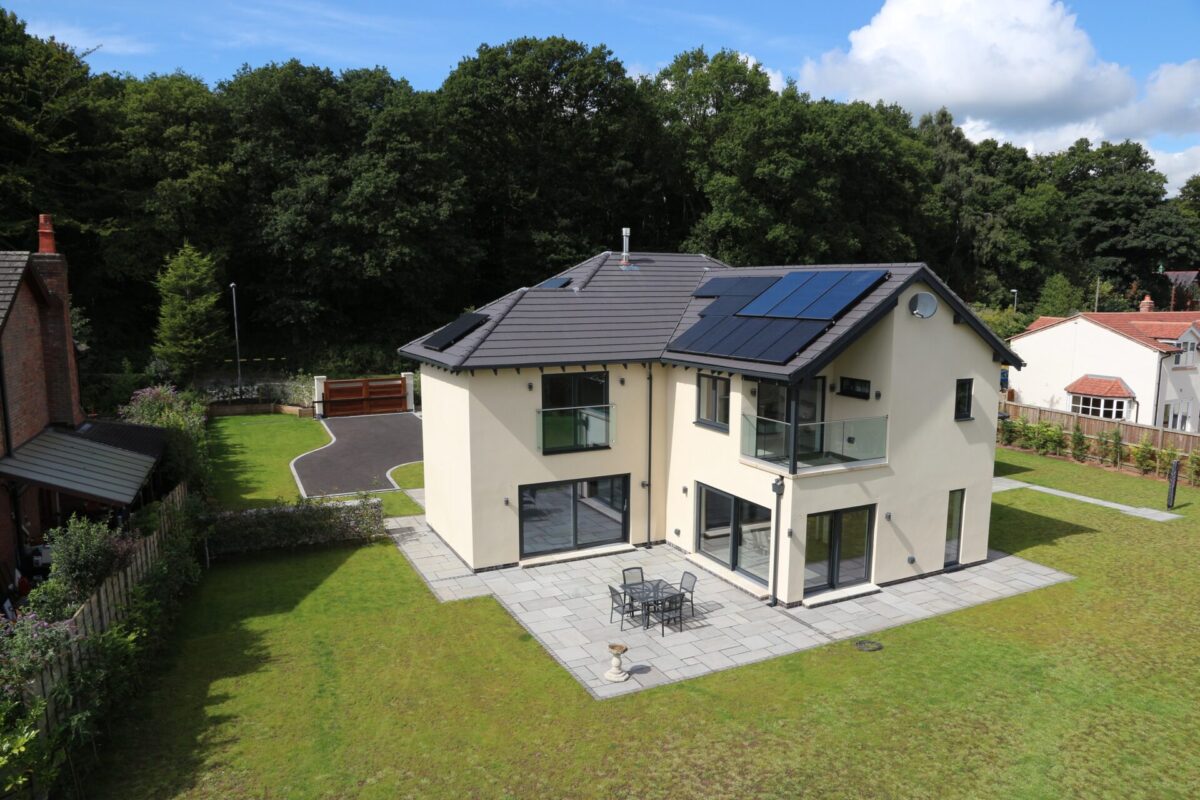
Solar power is becoming more widespread and we are seeing more and more solar panels retrofitted into domestic properties – either as UV panels on the roof, or as free-standing ground-level installations.
For new-build designs the days of thick solar panels standing proud of your roof are long gone. Inline solar panels look just like roof tiles, so there is no problem with aesthetics and design. The main challenge is their lifespan, which is only 20-25 years. Consumers are also reluctant to risk investment too. There are also question marks around the number of hours of sunlight available in the UK and the transferability of the energy. This results in usage and wastage issues for end users. Storage is key too, as where can surplus generated electricity be stored? Previously, people have sent their surplus to the National Grid, but once government subsidy for this stopped, so did the power sharing.
The future for energy efficiency
Powerwalls are fantastic, but extremely expensive and it is unclear currently how they would fit into SAP.
To take one example, a Tesla Powerwall is a rechargeable lithium-ion battery stationary home energy storage unit. The Powerwall stores electricity for solar self-consumption and provides backup power. The Powerwall was introduced in 2015 with limited production – mass production started in early 2017 and as of May 2021, Tesla had installed 200,000 Powerwalls.
Colin Francomb, of building consultants Ratio Seven, has been looking at the various options,
“Currently, with the costs of energy soaring, the perfect compromise is probably to have an air source heat pump that is powered by solar panels. This means you are effectively off-grid and self-sufficient, which in these uncertain times would be ideal. But these are not currently a viable alternative for most homeowners who are thinking about their energy bills, and also other areas they will have expenditure on.
“It’s more a case of looking at areas where efficiencies and savings can be made with the technology currently available”.
Interested in building your own home? Talk to us about our complete self-build package.